How to Lay Pavers for a Patio or Path: 9 Steps

By Rowan Plank · Published September 28, 2026
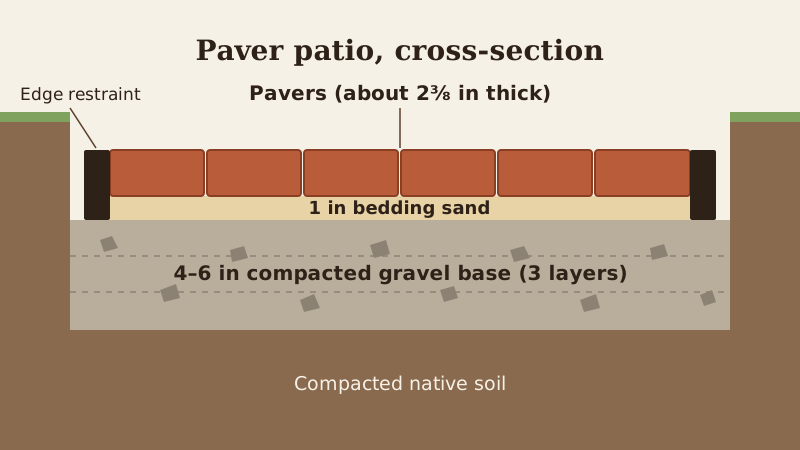
To lay pavers, you dig out the area, build a 4–6 inch compacted gravel base, screed 1 inch of sand on top, set the pavers, then lock them in with edge restraints and joint sand. The whole surface should slope away from the house about 1 inch every 4 feet.
The steps below follow Oregon State University Extension's paver guide. They work for concrete, brick and stone pavers on patios and walkways.
What do you need?
- Pavers, plus 5–10% extra for cuts
- Crushed gravel base (3/4-minus or "paver base")
- Bedding sand (coarse, washed concrete sand — ask your supplier for their bedding sand)
- Joint sand (fine paver sand or polymeric sand)
- Edge restraint: plastic, metal, precast concrete or wood
- Two 1-inch PVC pipes (or electrical conduit) and a straight 2×4 for screeding
- Stakes, string, line level, tape measure, shovel, rake
- Plate compactor (rental), and a wet saw or splitter for cuts
The Paver Path Calculator gives you pavers, gravel and sand for your dimensions.
1. Plan the layout and slope
Mark the outline with a hose or string, then paint a second line about 8 inches outside it. The base extends past the pavers so the edges have support.
Plan the slope before you dig. Water has to run off, or it pools and damages the base. Slope the surface away from the house about 1 inch every 4 feet (¼ in per foot). A 12 ft patio drops 3 inches from the house side to the far edge.
2. Figure out how many pavers to buy
Multiply length × width to get square feet, then add 5% for cuts, or 10% if your layout has curves or lots of cuts. Multiply by the paver's coverage (pieces per square foot, from the supplier). See how many pavers per square foot for common sizes.
3. Dig to the right depth
Total depth = base (4–6 in) + sand (1 in) + paver thickness. Many patio pavers are about 2⅜ in (60 mm) thick — check yours. On a 4 in base, that makes about 7⅜ in. Set stakes around the area and run string lines at finished height, stepping them down for the slope. Dig to depth, then compact the soil with the plate compactor.
How deep to dig for pavers has a depth table and material amounts.
4. Build the gravel base
Use crushed rock with mixed sizes and sharp edges, like 3/4-minus. The angular pieces lock together when compacted; round pea gravel doesn't. Go with 4 inches for a patio or walk over firm soil, and thicker on soft clay. Spread it in three thinner layers, compacting each one with several passes of the plate compactor. Slightly damp gravel compacts better. The finished base should match your slope.
5. Install edge restraints
Edging holds the pavers together. Without it, they spread and separate under traffic and weather. Plastic, metal, precast concrete and wood all work. Install it on the base along every edge that isn't against a wall or slab.
6. Screed 1 inch of sand
Lay two 1-inch PVC pipes on the base as rails. Spread sand 1 to 1½ in thick, then pull a straight 2×4 across the pipes to level it. Remove the pipes and fill the grooves. You're left with an even inch of sand. Don't walk on it after screeding.
7. Lay the pavers
Start at a corner or straight edge and work outward, setting pavers straight down so the sand isn't disturbed. Place them close together; many have built-in spacer nubs. Cut edge pieces with a diamond wet saw, splitter or masonry chisel, and wear safety glasses. When everything is placed, run the plate compactor over the pavers to seat them in the sand.
Wear protection when cutting
Cutting concrete and stone pavers makes fine silica dust. Use a wet saw or water-fed blade when you can, and wear eye and hearing protection and a respirator rated for silica dust.
8. Fill the joints
Sweep fine, dry sand into the joints until they're full, then compact again and sweep in more. Bagged paver sand or sifted play sand both work. Polymeric sand, which hardens after wetting, resists washout and weeds better. Both the pavers and the sand have to be dry for this step.
9. Seal and maintain (optional)
A sand-binding sealer helps keep joint sand in place, slows weed growth and makes stains easier to clean. Reseal every few years as needed. Avoid pressure washing — it blows out joint sand. If you do, refill the joints and reseal.
Sources: 10-Step Guide to Installing Pavers — OSU Extension.
FAQ
Can I lay pavers directly on dirt?
Not if you want them to stay flat. Without a compacted gravel base, soil shifts, holds water and heaves in freeze–thaw, and pavers sink or tilt within a season or two. A 4–6 in compacted base plus 1 in of sand is the standard for patios and walkways.
Can I use sand instead of gravel for the base?
No. Sand alone doesn't lock together and washes out. The base should be crushed rock with mixed sizes and sharp edges, such as 3/4-minus, which compacts into a solid layer. Sand is only the thin 1 in bedding layer on top.
Do I need to rent a plate compactor?
Yes, for anything bigger than a few square feet. You use it twice: on the gravel base in layers, and on the finished pavers to set them into the sand. A hand tamper can't get a base dense enough.
What sand goes between the pavers?
Fine, dry sand swept into the joints — bagged paver sand or sifted play sand. Polymeric sand, which hardens when wetted, holds up better against washout and weeds.