Hugelkultur Raised Bed Guide: 4-Layer Log & Soil Fill Ratio

By Efraín Vega · Published November 7, 2026 · Last updated November 16, 2026
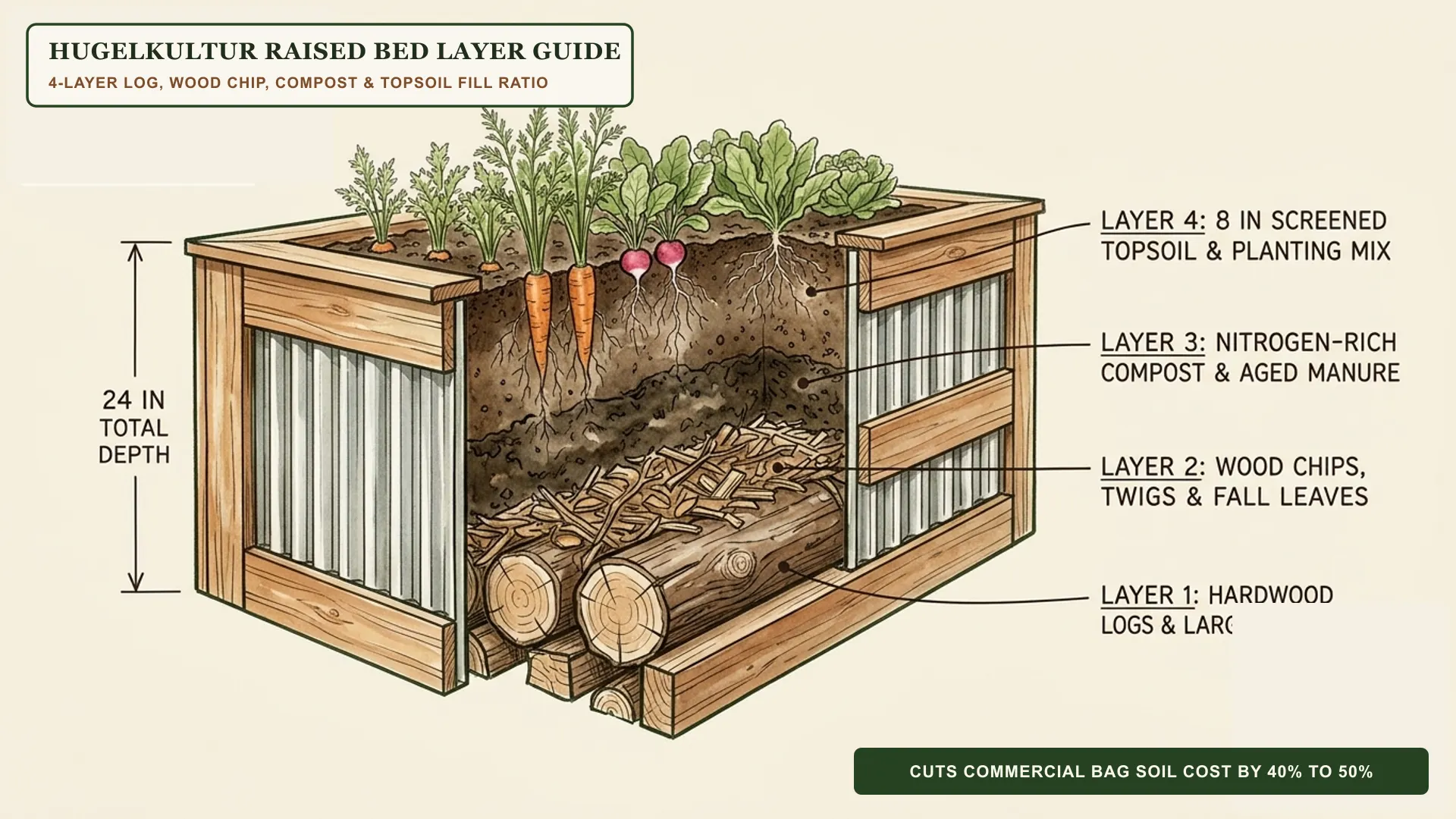
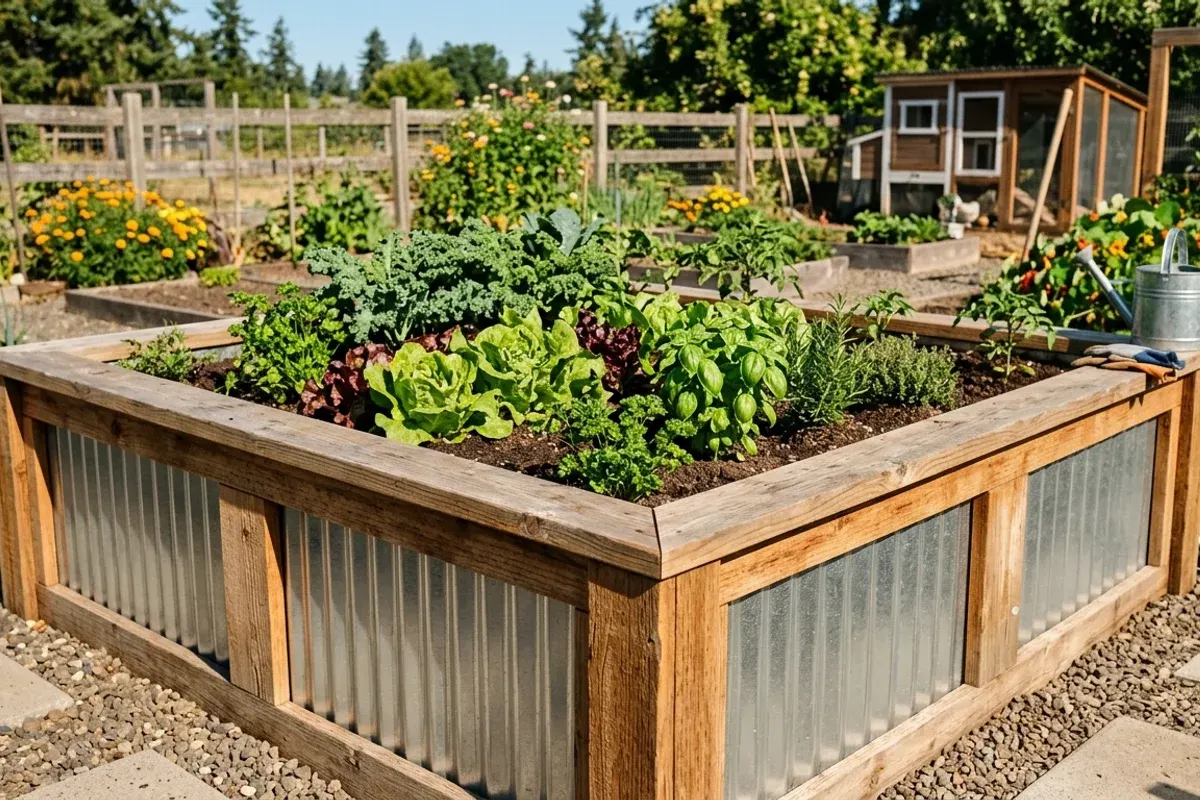
Filling a deep 24-inch or 32-inch corrugated metal or timber raised bed entirely with bagged potting mix is expensive: a single 4×8 bed at 24 inches deep holds 64 cubic feet (32 bags) of soil. Using the Hugelkultur raised bed method—layering decaying hardwood logs, branches, and compost in the bottom half of the bed—cuts your commercial soil cost by 40% to 50% while building a buried sponge that holds moisture through summer heatwaves.
Use our Raised Bed Soil Calculator to find the volume of your upper planting zone, or follow the exact 4-layer depth ratios below.
The 4-Layer Hugelkultur Ratio for Deep Raised Beds
For Hugelkultur to work without starving shallow vegetable roots of nitrogen, the top 8 to 12 inches must remain pure, nutrient-rich planting soil and compost:
| Layer (Bottom to Top) | Share of Bed Height | Depth in 24″ Bed | Depth in 32″ Bed | Material & Purpose |
|---|---|---|---|---|
| Layer 1: Coarse Wood Core | 35% – 40% | 8–10 in | 12–14 in | Aged hardwood logs (oak, maple, birch, apple, alder) laid parallel on bare ground |
| Layer 2: Chink & Carbon Fill | 15% – 20% | 4 in | 5–6 in | Small branches, wood chips, shredded fall leaves, and sod upside-down to pack voids |
| Layer 3: Nitrogen Buffer | 15% | 3–4 in | 4–5 in | Finished compost, aged cow/poultry manure, kitchen scraps, and green grass clippings |
| Layer 4: Root-Zone Topsoil | 30% – 35% | 8–10 in | 10–12 in | 60% screened topsoil + 30% compost + 10% perlite/vermiculite |
Soil Cost Savings: Full Soil vs. Hugelkultur (4×8 Raised Bed)
Here is how much commercial soil mix you actually need to buy for a standard 4×8-foot raised bed when the bottom half is filled with Hugelkultur wood and yard debris (including 10% settling on the top soil layers):
| Bed Wall Height | Total Interior Volume | Soil Needed (100% Soil Fill) | Soil Needed (Hugelkultur Top Half) | 2 cu ft Bags Saved |
|---|---|---|---|---|
| 12 inches (Standard) | 32 cu ft | 18 bags (1.30 yd³) | Not recommended (too shallow for logs) | 0 bags |
| 18 inches (Medium) | 48 cu ft | 27 bags (1.96 yd³) | 18 bags (12″ soil over 6″ branches) | 9 bags saved |
| 24 inches (Tall Bed) | 64 cu ft | 36 bags (2.61 yd³) | 18 bags (12″ soil over 12″ logs/chips) | 18 bags saved |
| 32 inches (Extra Tall) | 85.3 cu ft | 47 bags (3.48 yd³) | 21 bags (14″ soil over 18″ logs/chips) | 26 bags saved |
Avoid Hugelkultur in beds under 16 inches tall
In a standard 8-inch or 12-inch raised bed, large logs take up vital root depth and leave too little topsoil above the wood. Reserve log-core filling for beds 18 to 32 inches deep; in shallower beds, use shredded fall leaves or sheet mulch instead.
Best & Worst Woods for Hugelkultur Beds
- Best Woods (Fast sponge formation): Birch, Alder, Apple, Pear, Poplar, Cottonwood, Willow, Maple, and well-rotted Oak. Partly punky, mushroom-colonized firewood logs are gold—they already hold water like a damp sponge.
- Acceptable in Moderation: Aged Pine, Fir, or Spruce (keep to less than 25% of the wood layer, as resinous softwoods decay slowly).
- Never Use: Black Walnut (contains juglone, which stunts solanaceous crops like tomatoes, peppers, and eggplant), Red Cedar or Redwood (natural antimicrobial oils resist fungal decay for a decade), Black Locust, or any pressure-treated / creosote timber.
Step-by-Step Packing Technique (No Sinkholes)
The #1 mistake in Hugelkultur raised beds is leaving large empty caverns between logs. Two months after planting, rain washes the topsoil down into those voids and drops your garden level by 8 inches. Prevent this with wet-stage chinking:
- Lay logs directly on native soil (over cardboard and hardware cloth if voles or gophers are active—see our Root Depth Guide).
- Jam smaller sticks and wood chips into every gap between the logs, then run a garden hose for 5 minutes to wash the chips down into the cracks.
- Cap the wood layer with 3–4 inches of nitrogen-rich compost or manure and water again until compost slurry coats the top of the logs.
- Add 8 to 12 inches of screened topsoil mix (calculate your exact topsoil volume) and mound it 2 inches higher than target grade to account for first-season settling.
Ready to build a rot-proof modern high-sided frame? Check out our complete woodworking and metal plans for a DIY corrugated metal raised bed.
FAQ
How much soil does the Hugelkultur method save in a raised bed?
In a 24-inch to 32-inch tall raised bed, filling the bottom 40% to 50% with logs, branches, and organic yard debris cuts commercial bagged or bulk soil purchases by 40% to 50%.
What wood should you NEVER put in a Hugelkultur raised bed?
Never use Black Walnut (which releases juglone toxin that kills tomatoes and peppers), pressure-treated lumber, painted wood, cedar, black locust, or fresh allelopathic eucalyptus.
Will buried wood rob nitrogen from my vegetable roots?
Only at the direct surface of raw wood chips. By keeping logs and branches in the bottom half of the bed and buffering them with a 3-to-4-inch layer of nitrogen-rich compost, aged manure, or grass clippings beneath an 8-to-12-inch topsoil cap, vegetable roots thrive without nitrogen tie-up.
How much does a Hugelkultur raised bed settle in the first year?
Expect 3 to 5 inches of settling over the first 12 months as twigs and leaves break down and soil washes into air pockets around the logs. Water each layer thoroughly as you build to minimize post-planting sinkholes.