Landscape Fabric Under Gravel & Raised Beds: When to Use & When to Skip

By Efraín Vega · Published November 12, 2026
Few topics in backyard landscaping cause as much confusion as landscape fabric (also known as weed barrier or geotextile). Used incorrectly — such as underneath organic bark mulch or beneath raised garden beds — it suffocates beneficial soil microbiology, creates a gummy layer of silt, and fails to stop weeds that blow in from above.
Used correctly — specifically beneath gravel paths, paver patios, french drains, and shed pads — high-grade geotextile fabric is the single most important layer that prevents your stone from sinking into the mud.
The Rule: Where to Use It vs. Where to Skip It
| Application | Landscape Fabric? | Why? |
|---|---|---|
| Gravel Walkways & Patios | Yes (Crucial) | Prevents heavy stone from sinking into clay/soil subbase over time. |
| French Drains & Dry Wells | Yes (Non-Woven) | Filters out silt particles while allowing rapid water percolation. |
| Shed Gravel Foundations | Yes (Heavy Woven) | Stabilizes 57 crushed stone base and distributes structural weight. |
| Under Raised Garden Beds | Skip It (Use Hardware Cloth) | Blocks earthworms and deep vegetable roots; silts up and impedes drainage. |
| Under Organic Wood Bark Mulch | Skip It | Decomposing organic mulch breaks down on top of the fabric into weed-friendly dirt anyway. |
Why Fabric is Mandatory Under Gravel
A common misconception is that landscape fabric's primary job is weed prevention. In reality, weeds grow from windblown seeds that land on top of the gravel.
Under gravel, landscape fabric serves an entirely different, mechanical purpose: subgrade separation and tensile stabilization.
When foot traffic, wheelbarrows, or vehicles roll over gravel placed directly on bare dirt, the sharp stones punch downward into the soil, while wet subsoil mud oozes upward. Within two seasons, your 3-inch layer of expensive crushed rock has vanished into the earth.
A commercial woven geotextile fabric (3.5 to 5 oz) acts as a permanent structural membrane, keeping stone and earth permanently separated.
To calculate the exact tonnage and cubic yards of gravel needed for your path or patio, use our Gravel Calculator.
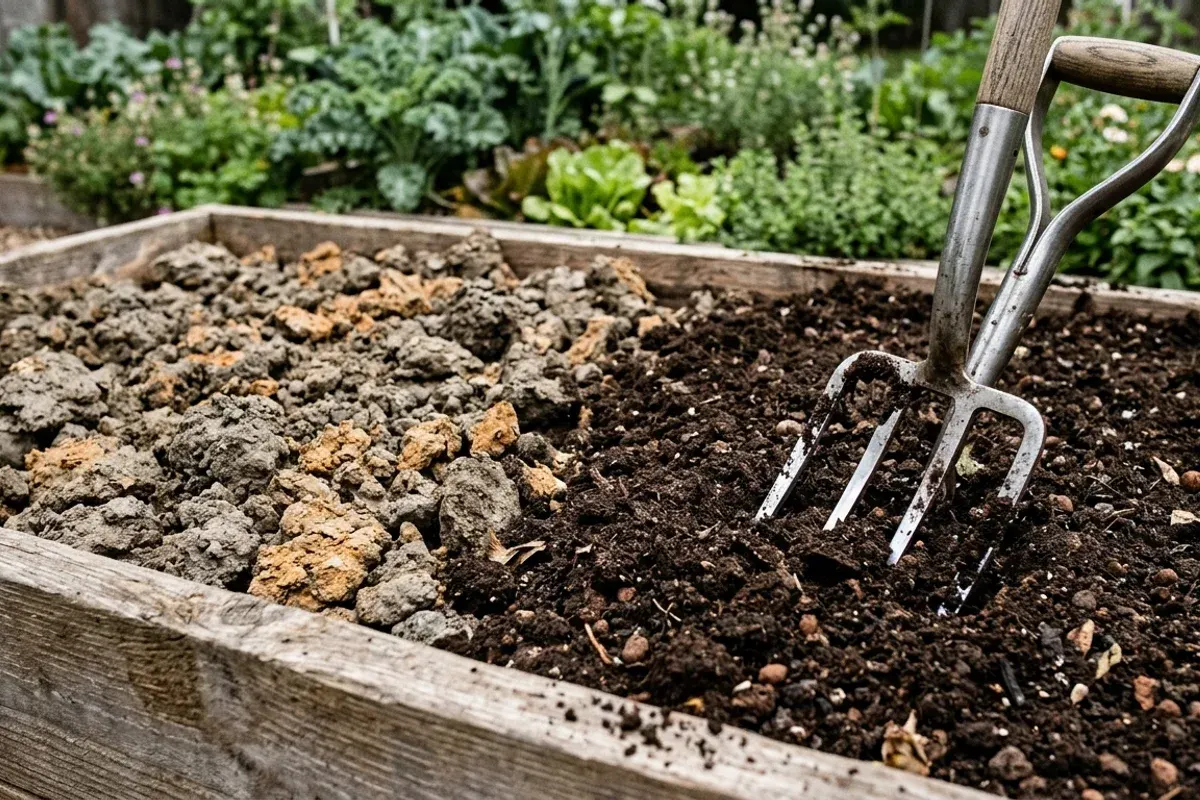
Why You Should Never Line the Bottom of Raised Beds with Fabric
Gardeners often line raised beds with landscape fabric hoping to permanently stop weeds. However:
- Roots Need Depth: Staked tomatoes send taproots 24 to 36 inches deep. A layer of plastic fabric truncates their root system.
- Earthworm Barrier: Nightcrawlers and earthworms need to migrate vertically between native subsoil and your rich compost bed to cycle nutrients and aerate the root zone.
- Silt Clogging: Over 1 to 2 years, fine compost particles wash downward and settle against the woven threads, creating an impermeable sheet that traps excess water and causes root rot.
The better alternative: If you have burrowing moles, voles, or gophers, line the bottom of your raised bed with ½-inch galvanized steel hardware cloth (wire mesh). It allows full water drainage and earthworm passage while completely blocking rodents.
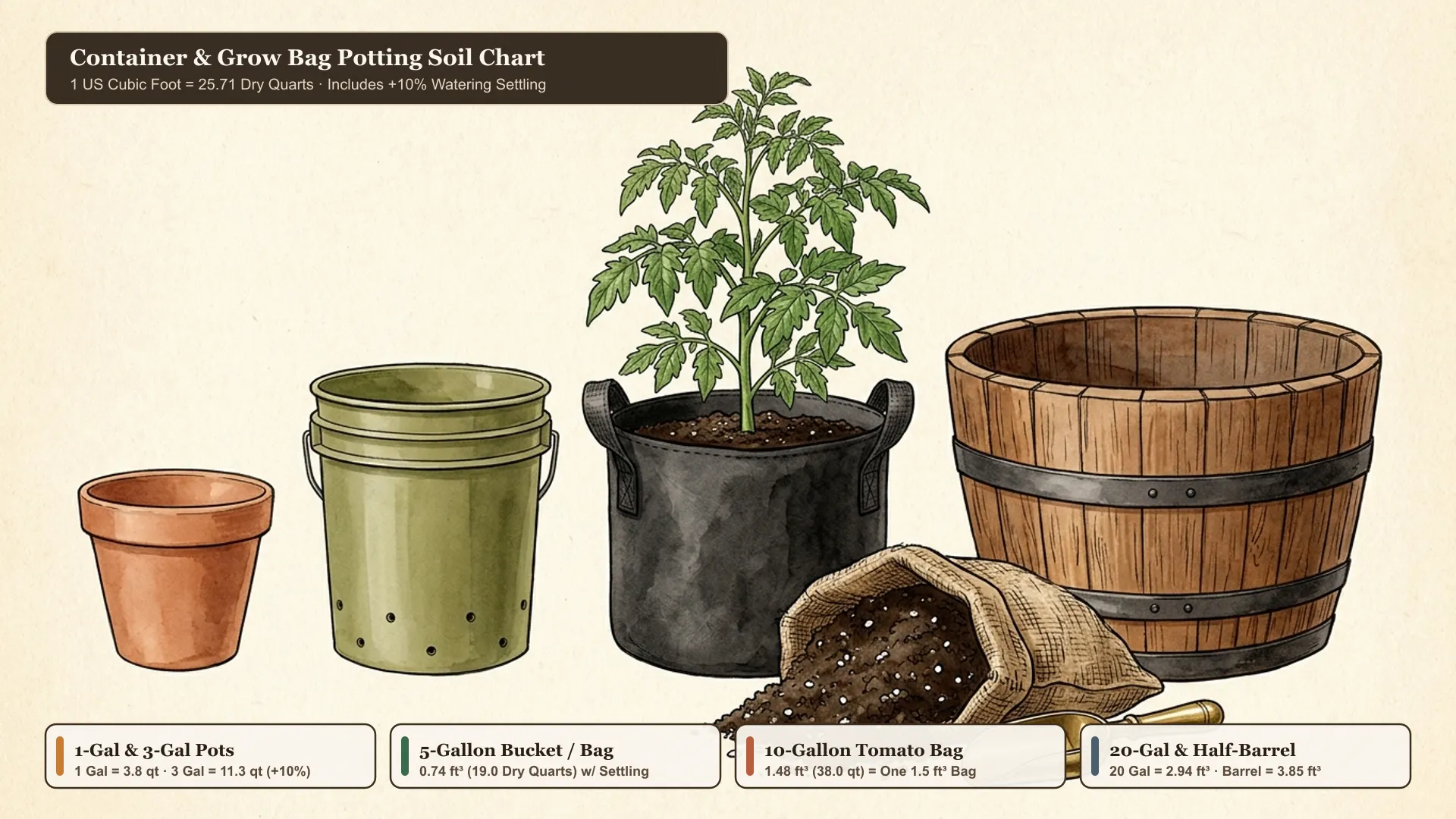
Plan your bed soil volume with our Raised Bed Soil Calculator.
How to Install Landscape Fabric Under Gravel, Step-by-Step
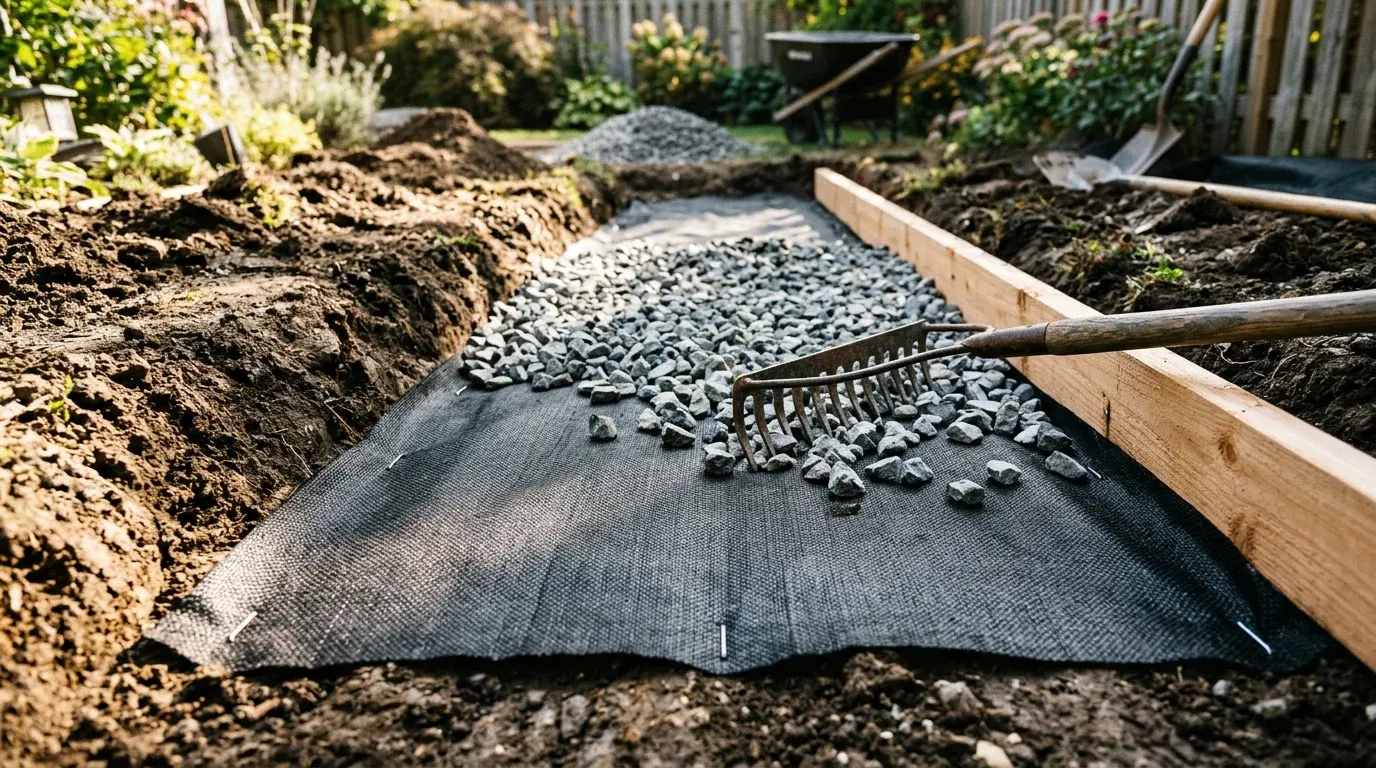
1. Excavate & Compact the Trench
Excavate the path or patio area 4 to 6 inches deep. Rake the subsoil flat, remove sharp roots or large rocks, and compact the dirt thoroughly with a hand tamper or plate compactor.
2. Install Edging Restraints
Install your border restraint — such as cedar boards, metal edging, or concrete cobblestones — before laying fabric. Check edging lengths with our Landscape Edging Calculator.
3. Roll Out Fabric with 12-Inch Overlaps
Roll out commercial-grade woven geotextile fabric along the length of the trench. If using multiple parallel runs, overlap seams by 8 to 12 inches.
4. Drive Steel Landscape Staples
Pin the fabric to the subsoil using 6-inch galvanized U-shaped landscape staples. Place staples every 2 to 3 feet along seams and perimeter edges.
5. Spread Gravel Immediately
Dump crushed stone (such as 3/8-inch pea gravel, crushed limestone, or chip seal) directly onto the fabric to a uniform depth of 2 to 3 inches, smoothing with a flat landscape rake.
FAQ
Should you put landscape fabric at the bottom of a raised garden bed?
Usually no. Putting landscape fabric directly under a raised bed blocks beneficial earthworms and deep-rooting vegetables (like carrots, tomatoes, and parsnips) from penetrating subsoil, and can impede drainage over time as silts clog the pore openings. The only exception is placing a wire mesh (gopher hardware cloth) or lining beds placed directly over toxic subsoil or concrete.
Does landscape fabric belong under gravel walkways and driveways?
Yes, absolutely. Under gravel paths, heavy-duty woven needle-punched geotextile fabric is essential — not to stop airborne weed seeds, but to act as a physical separation barrier that stops heavy angular stone from sinking into soft subsoil mud over time.
What type of landscape fabric is best under gravel?
Choose a heavy-duty commercial woven polypropylene or needle-punched non-woven geotextile fabric rated at 3 to 5 ounces per square yard. Cheap perforated plastic rolls from big-box retail stores tear under angular stone and disintegrate within 2 to 3 years.
How much overlap is needed between rows of landscape fabric?
Overlap adjoining rolls by at least 6 to 12 inches, and anchor the seams with 6-inch galvanized steel landscape staples spaced every 12 to 18 inches. This prevents gravel from slipping between the seams and stops aggressive weeds from exploiting edges.