How Much Sod Do I Need? Pallet Size, Roll Dimensions & Layout

By Efraín Vega · Published November 7, 2026
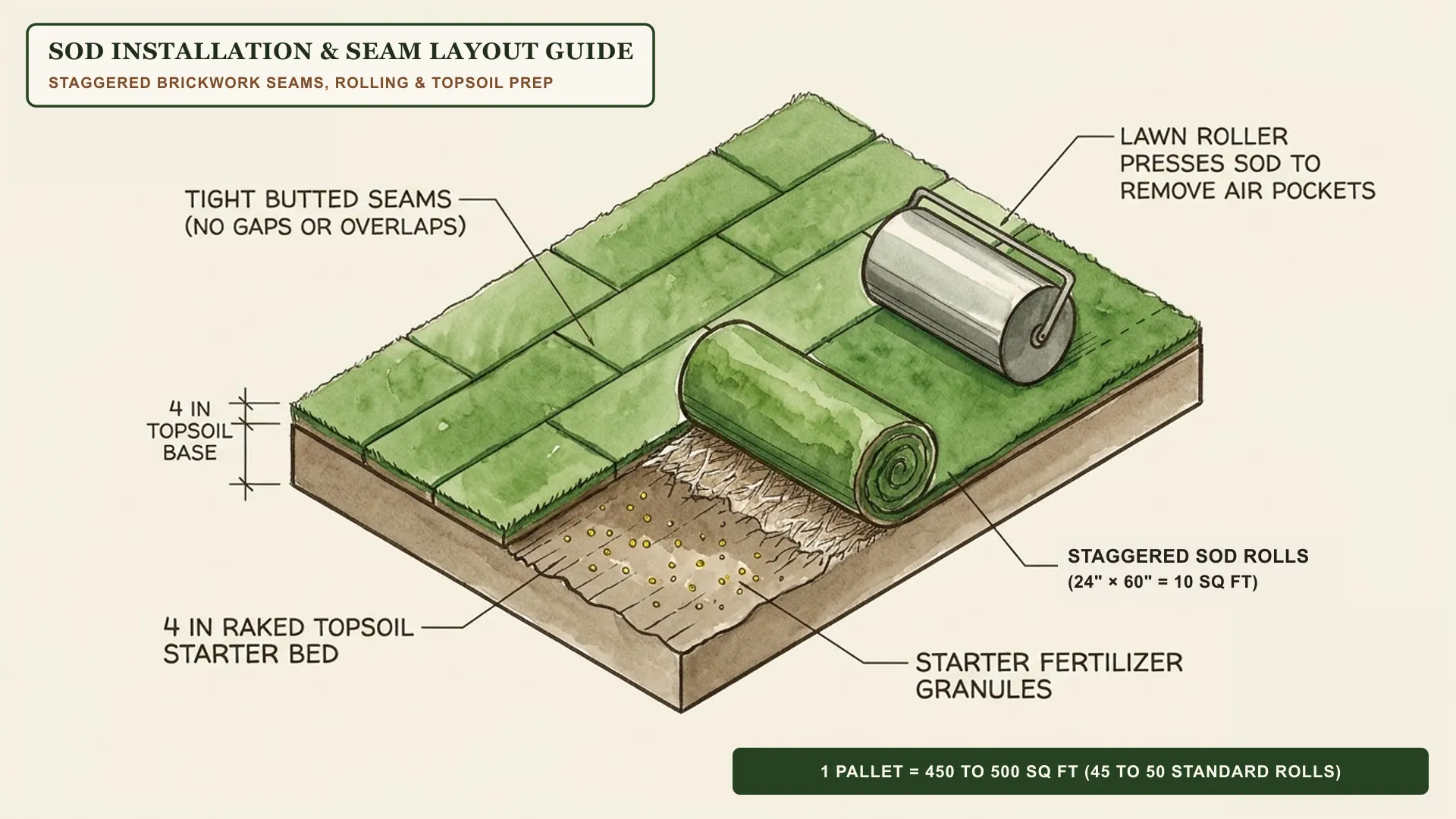
To calculate how much sod you need, multiply your lawn's length by width in feet, add 10% extra for cutting curves and edges, and divide by 450 or 500 square feet per pallet (or by 10 square feet per standard roll).
Use our Sod & Turf Roll Calculator for an instant pallet, roll, and starter topsoil takeoff, or check the standard lawn reference chart below.
Sod Rolls, Pallets & Topsoil by Lawn Size
The table below includes a 10% cutting waste allowance and shows both standard 10 sq ft commercial rolls (24″×60″) and 450 sq ft / 500 sq ft pallets:
| Net Lawn Area | Total Sod w/ 10% Waste | 10 sq ft Rolls (24″×60″) | 450 sq ft Pallets | 500 sq ft Pallets | Topsoil (1″ Leveling) | Topsoil (4″ New Base) |
|---|---|---|---|---|---|---|
| 500 sq ft (Takeoff) | 550 sq ft | 55 rolls | 1.22 pallets | 1.10 pallets | 1.70 yd³ | 6.79 yd³ |
| 1,000 sq ft (Takeoff) | 1,100 sq ft | 110 rolls | 2.44 pallets | 2.20 pallets | 3.40 yd³ | 13.58 yd³ |
| 2,000 sq ft (Takeoff) | 2,200 sq ft | 220 rolls | 4.89 pallets | 4.40 pallets | 6.79 yd³ | 27.16 yd³ |
| 5,000 sq ft | 5,500 sq ft | 550 rolls | 12.22 pallets | 11.00 pallets | 16.98 yd³ | 67.90 yd³ |
Need to order bulk soil before the sod truck arrives? Run our Topsoil Calculator to convert your yard dimensions into cubic yards and dump-truck tons.
Standard Sod Roll & Slab Sizes Explained
Not all turf is cut to the same dimensions. Check which cut your local sod farm or home center stocks before ordering:
| Cut Type | Dimensions (Inches) | Dimensions (Feet) | Coverage per Piece | Weight per Piece (Moist) | Rolls per 450 ft² Pallet |
|---|---|---|---|---|---|
| Commercial Big Roll | 24″ × 60″ | 2′ × 5′ | 10.0 sq ft | 45–50 lbs | 45 rolls |
| Farm Slab / Roll | 18″ × 72″ | 1.5′ × 6′ | 9.0 sq ft | 40–45 lbs | 50 rolls |
| Warm-Season Slab | 16″ × 24″ | 1.33′ × 2′ | 2.67 sq ft | 12–14 lbs | 168 slabs |
Drop the soil grade 1 inch below sidewalks and driveways
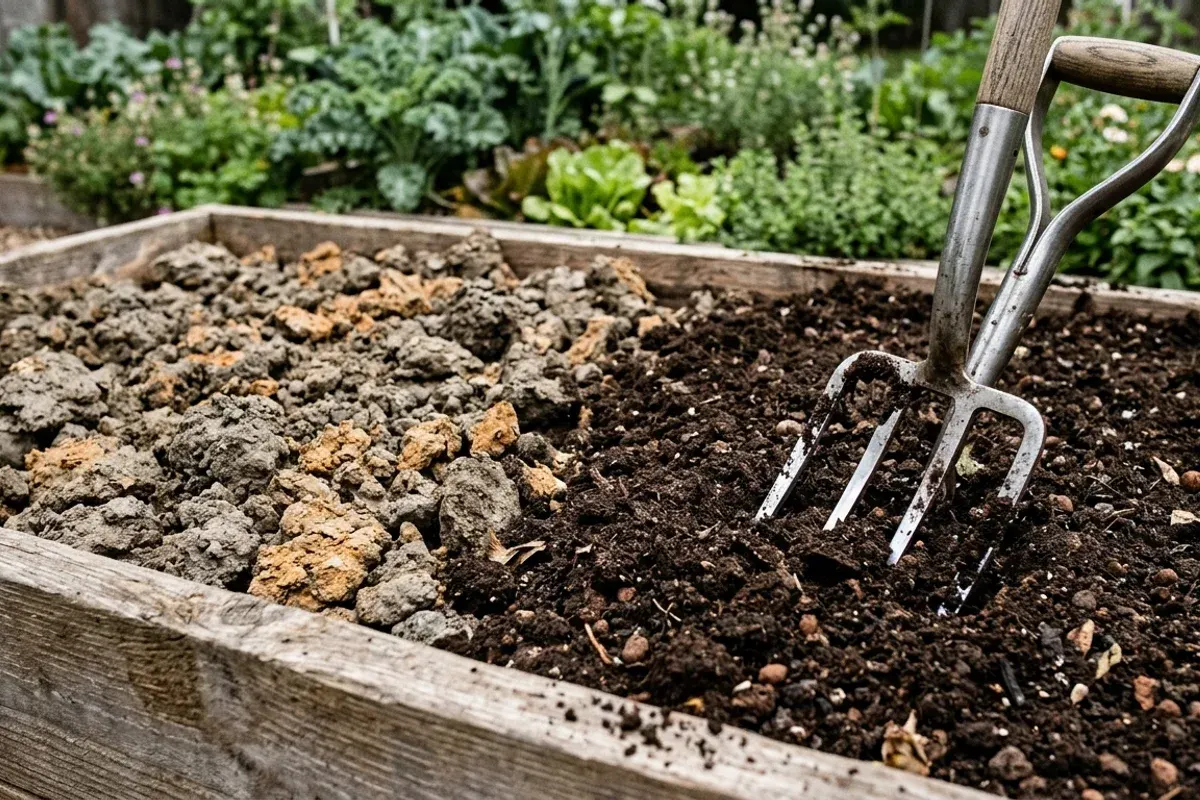
Sod has a 3/4-inch to 1-inch thick root-and-soil mat. When grading your starter topsoil, rake the soil surface 1 inch below concrete sidewalks, patios, and driveway edges so the finished turf sits flush with the pavement instead of forming a trip lip that scalps under your lawnmower.
5 Rules for Laying Sod So Seams Disappear
- Roll and fertilize the soil bed first. Spread 4 lbs of high-phosphorus starter fertilizer per 1,000 sq ft over your raked topsoil and lightly mist the soil so you aren't unrolling tender white turf roots onto bone-dry, hot dirt.
- Start along your longest straight edge. Snap a string line or follow a straight driveway/patio edge for your first row.
- Stagger end seams like brickwork. Offset every adjacent row by half a roll (30 inches on a 5-foot roll). Never align four corners at a single intersection—staggered T-joints prevent water erosion channels and dry edges.
- Butt edges tightly—never overlap. Push edges firmly together without stretching the roll, and trim curves with a serrated sod knife or sharp landscape edger. Avoid leaving small 6-inch triangle scraps along hot concrete edges where they dry out rapidly; place full rolls on the outside border and tuck cut pieces one row inward.
- Roll with a water-filled lawn roller and soak immediately. Within 30 minutes of laying a section, roll it with a lawn roller filled one-third full of water to press every root into firm contact with the topsoil and eliminate air pockets, then water until the soil 1 inch beneath the sod mat is saturated.
FAQ
How many square feet does a pallet of sod cover?
A standard pallet of sod covers 450 to 500 square feet. Cool-season grasses (Kentucky Bluegrass, Turf-Type Tall Fescue) are usually palletized at 450 sq ft, while warm-season grasses (Bermuda, Zoysia, St. Augustine) typically cover 450 to 500 sq ft per pallet.
How big is a standard roll of sod?
Commercial farm sod rolls measure 24 inches wide by 60 inches long (2 ft × 5 ft = 10 square feet) or 18 inches by 72 inches (9 square feet). Home center retail patch rolls are smaller, typically 16 inches by 24 inches (2.67 square feet).
How deep should topsoil be under new sod?
For a brand-new lawn over poor subsoil, spread and grade 4 inches of screened topsoil. If renovating an existing yard that already has decent soil, a 1-to-2-inch leveling layer of screened topsoil is sufficient.
How soon after delivery must sod be laid?
Install sod within 12 to 24 hours of pallet delivery. Stacked sod rolls generate internal biological heat quickly; leaving a pallet tarped or sitting in the sun for 48 hours can cook and yellow the turf inside the stack.