Topsoil vs Fill Dirt vs Garden Soil: What to Buy & When

By Efraín Vega · Published November 20, 2026
Ordering soil for an outdoor project can be deceptively tricky. Quarries and landscape suppliers list fill dirt, screened topsoil, and amended garden soil side-by-side on their price sheets—often with confusing descriptions.
Using the wrong material can destroy your budget or ruin your landscape:
- Planting grass seed in raw fill dirt results in stunted, yellowing turf that cannot penetrate hard clay.
- Filling deep sinkholes or patio sub-bases with topsoil causes the ground to sink 3 to 6 inches within two seasons as organic matter decomposes.
Here is the exact engineering and biological breakdown of each soil type and when to specify each for your project.
1. What Is Fill Dirt? (The Structural Subsoil)
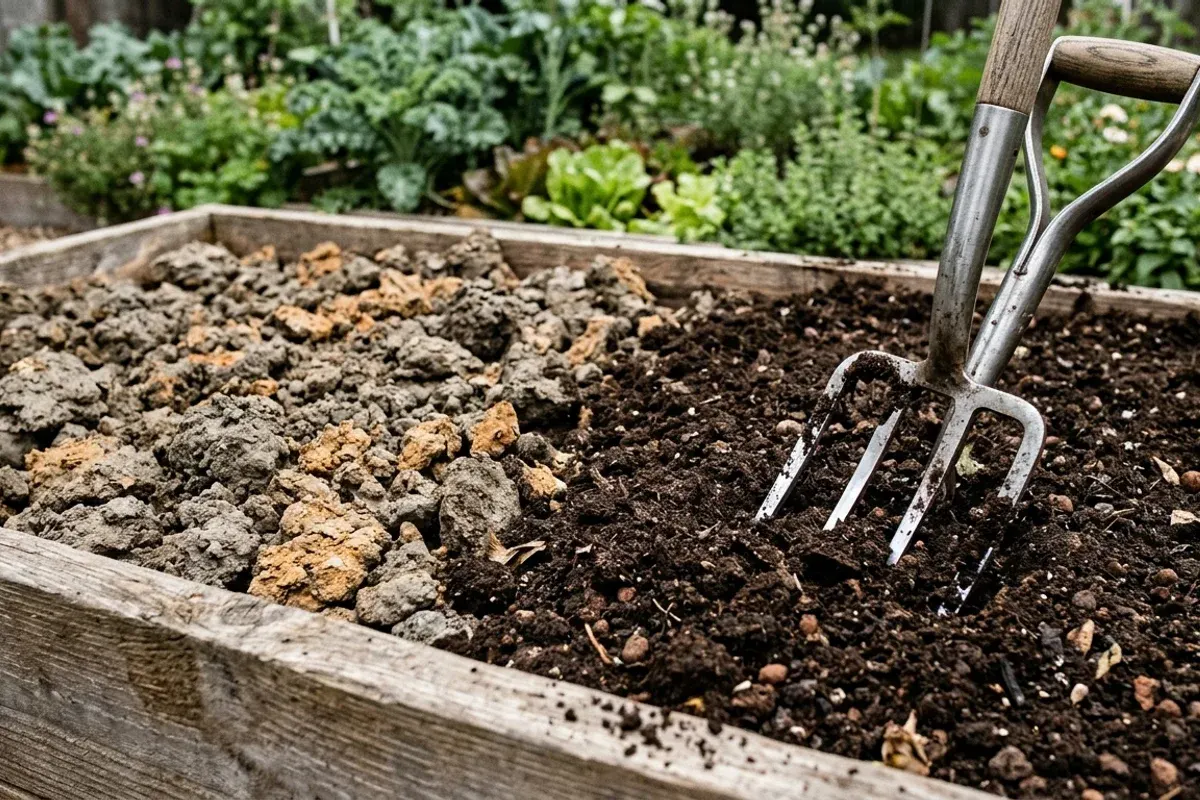
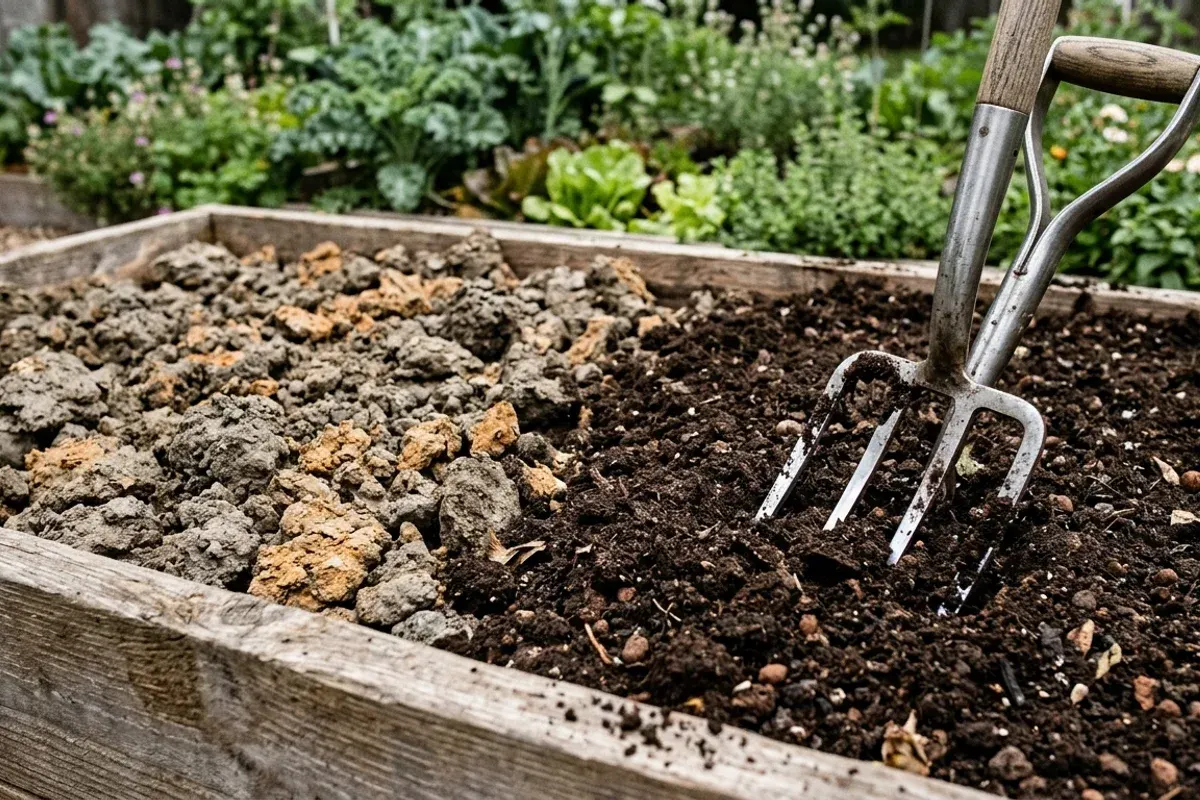
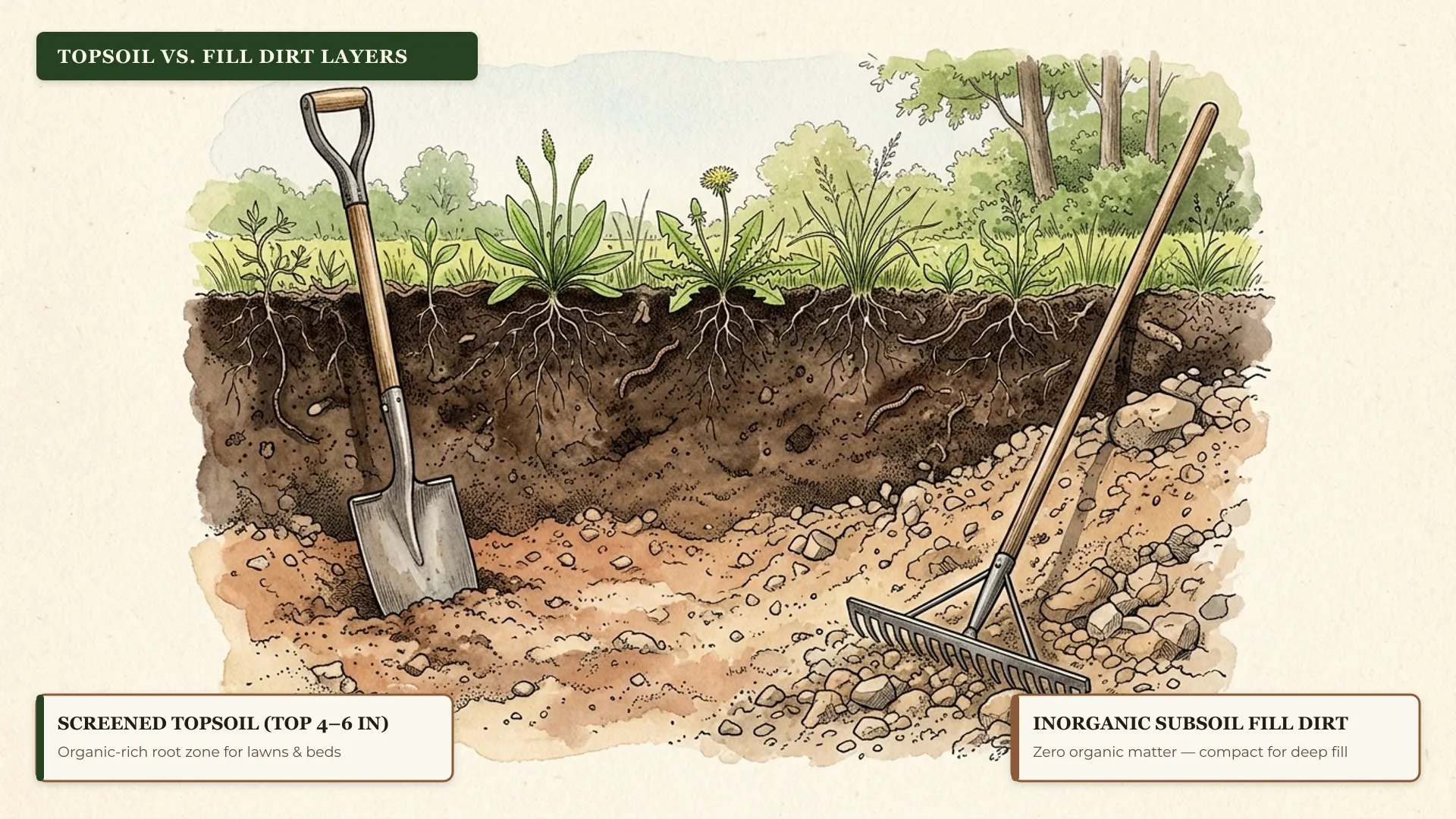
Fill dirt is excavated from below the biological horizon (usually 12 to 36 inches deep). It consists of weathered inorganic minerals—heavy clay, silt, sand, and small gravel fragments.
- Organic Matter Content: 0% to 1%.
- Biological Activity: Negligible; contains virtually no earthworms, mycorrhizae, or decomposing plant material.
- Compaction Profile: Packs down into a dense, load-bearing mass that will not settle or shift once rolled with a plate compactor or excavator bucket.
- Best Uses:
- Filling deep holes, trenches, or grade drop-offs deeper than 6 inches.
- Building elevated berms or sloping grade away from home foundation walls.
- Sub-base leveling beneath concrete slabs, shed gravel pads, and paver walkways.
2. What Is Topsoil? (The Natural Turf Layer)
Topsoil is the outermost 2 to 8 inches of the Earth's crust. It is dark brown to black in color, crumbly (friable), and screened through 1/2-inch or 3/8-inch vibrating industrial trommels to remove large rocks, roots, and debris.
- Organic Matter Content: 4% to 12%.
- Biological Activity: High; rich in beneficial microbes, earthworm castings, and soil minerals.
- Compaction Profile: Moderate. It settles 10% to 15% after watering, but retains enough macro-pores for root aeration.
- Best Uses:
- Topdressing existing lawns to fix uneven depressions (1–2 inches deep).
- Surface prep for new grass seed or laying fresh sod (3–4 inches deep).
- General landscape planting beds, tree rings, and shrub borders.
3. What Is Garden Soil? (The Cultivated Growing Medium)
Garden soil is not native field dirt—it is an engineered blend manufactured specifically for plants. It typically combines screened topsoil with heavy additions of aged mushroom compost, composted bark, perlite, and aged manure.
- Organic Matter Content: 20% to 50%.
- Biological Activity: Very high; delivers immediate plant-available nutrients (NPK).
- Compaction Profile: Very loose and fluffy; does not compact well.
- Best Uses:
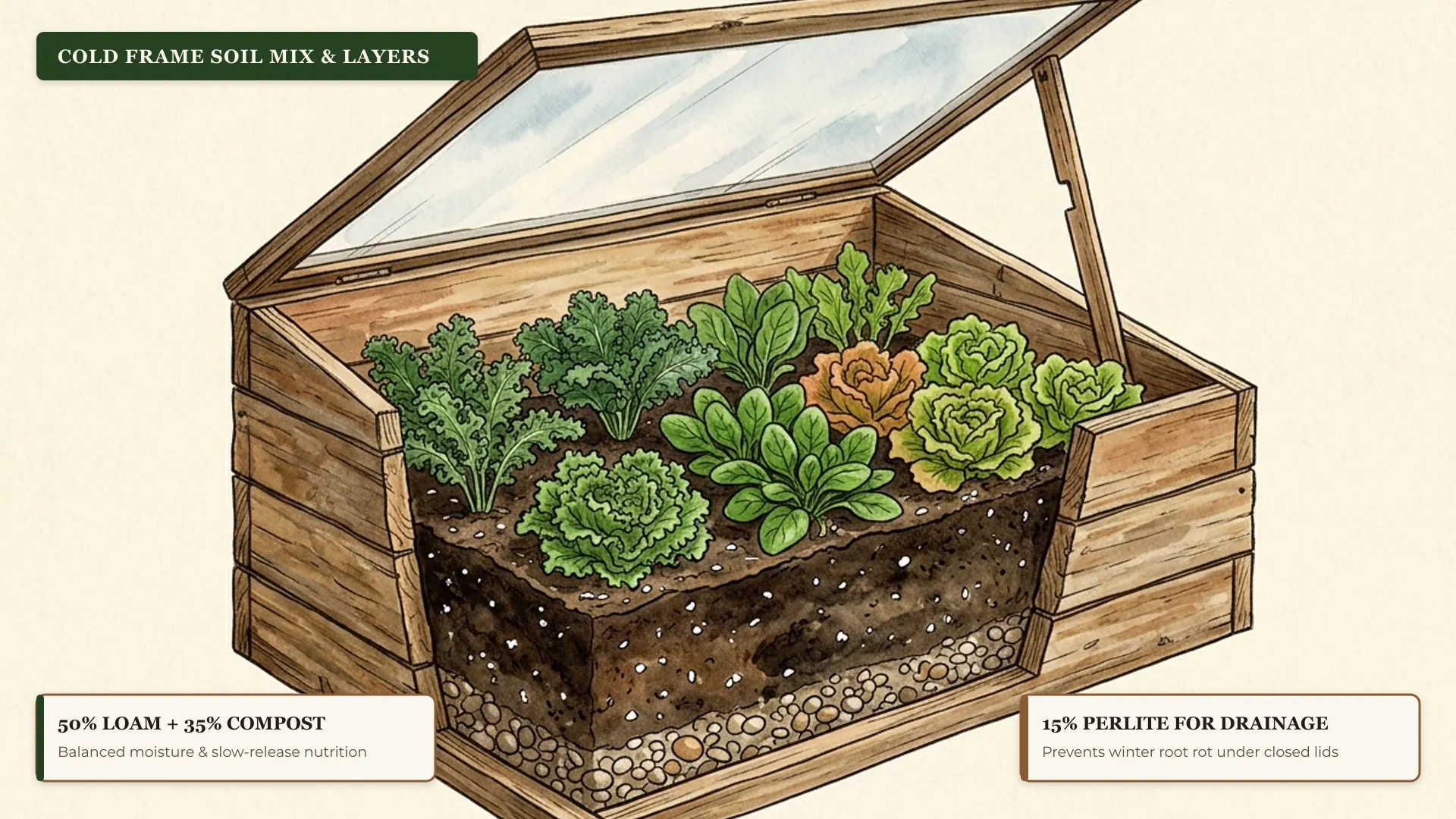
- Raised vegetable garden beds and cold frames.
- Intensive flower beds and perennial borders.
- Container gardening and greenhouse planting (often formulated with peat or coco coir).
Direct Comparison & Buyer's Guide
| Feature | Fill Dirt | Screened Topsoil | Enriched Garden Soil |
|---|---|---|---|
| Primary Composition | Sand, silt, clay minerals | Native top-layer soil (screened) | Topsoil + 30–50% compost & humus |
| Organic Matter | 0% – 1% | 4% – 12% | 20% – 50% |
| Settling / Shrinkage | Minimal (< 3%) | Moderate (10% – 15%) | High (20% – 30% over 2 years) |
| Structural Stability | High (Can support paths/structures) | Moderate (Not structural) | Very Low (Spongy & airy) |
| Plant Growth Support | Poor (Nutrient-barren) | Good (Ideal for turfgrass & trees) | Exceptional (Heavy feeder vegetables) |
| Average Cost per Cu Yd | $12 – $22 | $30 – $45 | $45 – $65 |
The Golden Rule for Layering
When leveling a yard or grading a sloped area:
- Deeper than 4 to 6 inches: Use fill dirt to build structural elevation and tamp it in 3-inch lifts.
- Top 3 to 4 inches: Cap the compacted fill dirt with screened topsoil to establish a fertile root zone for lawn seed or sod.
- Planting holes and raised beds: Add compost or garden soil directly into planting zones where heavy-feeding vegetables and ornamentals grow.
Calculate exact quantities of bulk topsoil, tons, and retail bags for your property with our Topsoil & Fill Dirt Calculator.
FAQ
Can I use topsoil as fill dirt?
No. You should never use topsoil to fill deep holes, level subgrades under a patio, or build up grades against a home foundation. Because topsoil contains 5% to 15% organic matter, it decomposes, compacts, and shrinks over time. If placed deeper than 6 inches, topsoil decomposes anaerobically, creating sinkholes and structural instability.
What is fill dirt made of?
Fill dirt is subsoil excavated from beneath the biologically active topsoil layer (typically 12 or more inches deep). It consists primarily of broken minerals, sand, silt, and inorganic clay. Because it contains virtually zero organic matter, it does not decompose or lose volume after mechanical compaction.
Is topsoil or garden soil better for grass seed?
Screened topsoil (or a 70/30 blend of topsoil and fine compost) is best for starting grass seed and laying sod. Bagged 'garden soil' or potting mix is too rich, loose, and expensive for large lawn surfaces, and can dry out too quickly before grass roots establish.
How much cheaper is fill dirt than topsoil?
Fill dirt is roughly 40% to 60% cheaper than screened topsoil. Bulk fill dirt typically costs $12 to $22 per cubic yard delivered, whereas shredded screened topsoil costs $30 to $45 per yard, and premium enriched garden soil runs $45 to $65 per yard.