Sheet Mulching (Lasagna Gardening): Autumn Step-by-Step

By Efraín Vega · Published November 25, 2026
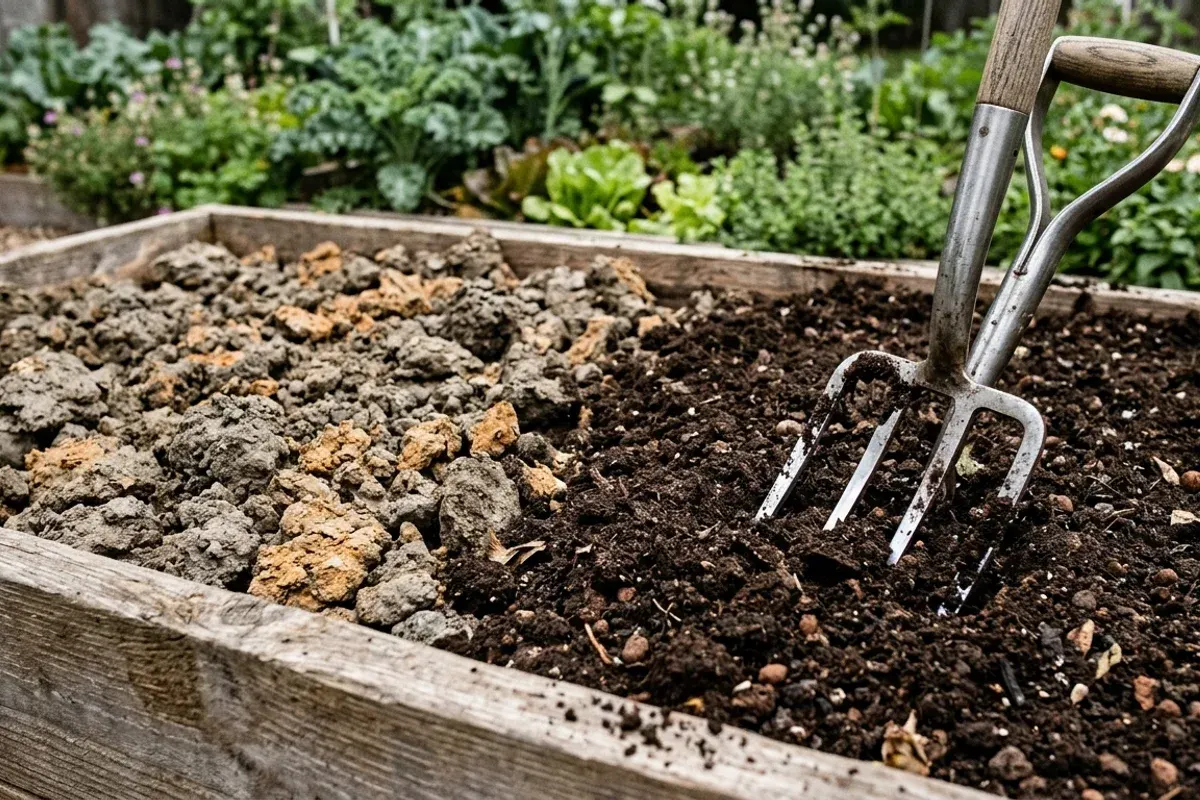
Digging up grass with a spade or hiring a gas-powered sod cutter is backbreaking labor that strips away your yard's most fertile topsoil layer.
Sheet mulching (also known as lasagna gardening) builds rich, weed-free garden beds directly on top of existing grass or weeds without digging a single shovel of dirt.
Late autumn is the absolute best time to sheet mulch: winter rains keep layers moist, freeze-thaw cycles fracture hard subsoils, and earthworms spend five months converting your autumn leaves and kitchen scraps into dark, biological gold before spring planting arrives.
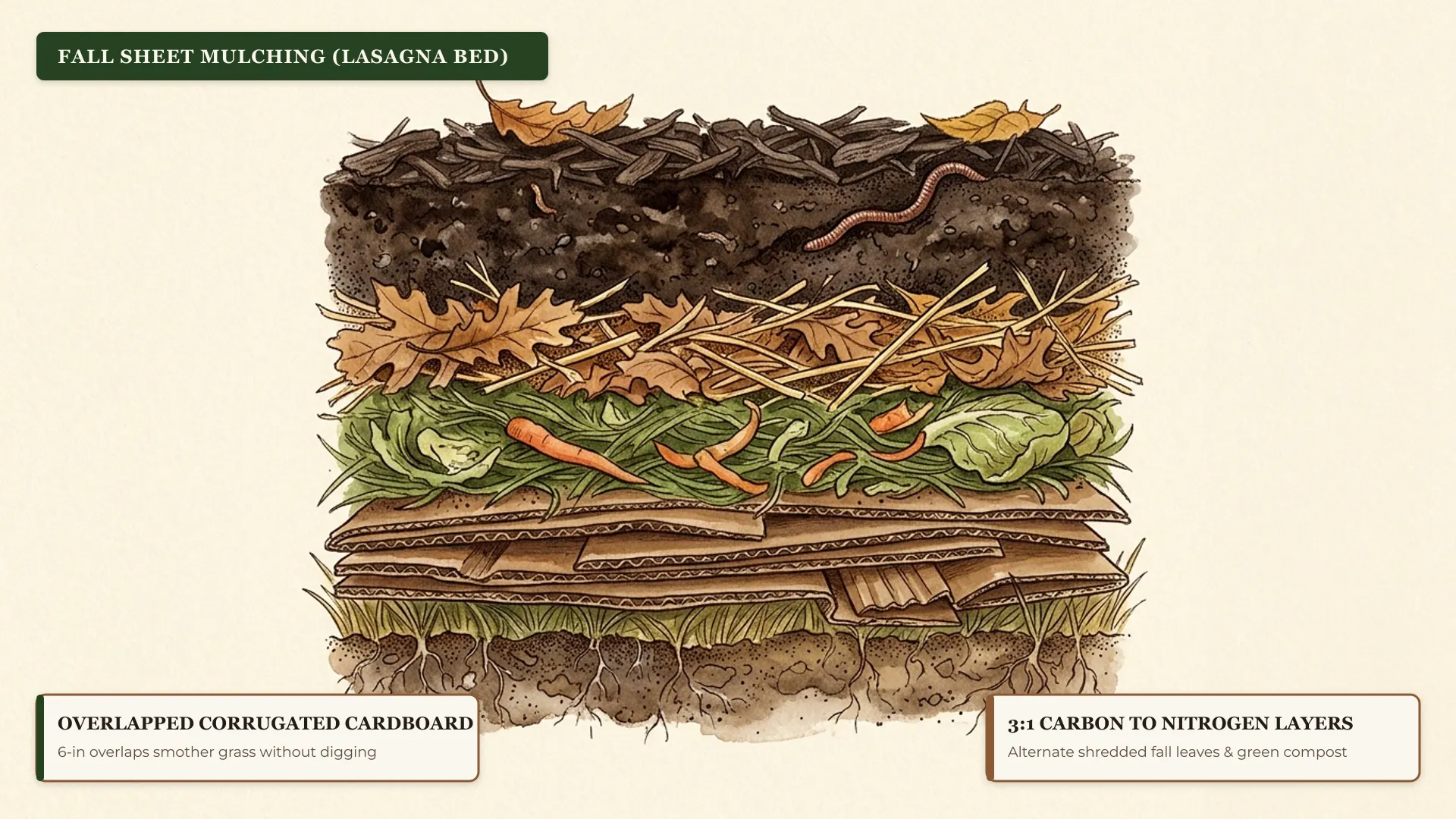
The 6 Stratified Lasagna Layers (Bottom to Top)
To build a productive lasagna bed, alternate carbon-rich "brown" materials with nitrogen-rich "green" materials at an overall 3:1 carbon-to-nitrogen ratio:
Layer 1: Soil Aeration & Scalping (The Ground)
- Mow the existing lawn or weed patch as low as your lawn mower can go (scalp the grass). Leave clippings where they lie.
- If the ground is bone-dry, soak the turf thoroughly with a garden hose before placing cardboard; moisture speeds up microbial activity under the paper.
- Sprinkle a light dusting of bone meal, kelp meal, or agricultural lime if your native soil is acidic or compacted.
Layer 2: Cardboard Smothering Barrier
- Lay clean, plain corrugated cardboard across the entire bed footprint.
- Overlap all seams by 6 to 8 inches: Do not leave gaps. Bermuda grass and thistle will exploit any seam under 6 inches.
- Soak the cardboard thoroughly with water until it is soft and pliant. Wet cardboard conforms to ground contours and welcomes earthworms.
Layer 3: High-Nitrogen "Green" Layer (2 to 3 Inches)
- Materials: Fresh grass clippings, green garden trimmings, coffee grounds, kitchen vegetable scraps, or fresh herbivore manure (rabbit, chicken, or horse).
- Purpose: Ignites biological heat and jumpstarts microbial breakdown of the cardboard underneath.
Layer 4: High-Carbon "Brown" Layer (4 to 6 Inches)
- Materials: Shredded autumn leaves, clean oat straw, pine needles, or shredded non-glossy newspaper.
- Purpose: Traps oxygen pockets, balances moisture, and provides long-chain carbon food for beneficial soil fungi.
Layer 5: Biological Starter Compost (2 to 3 Inches)
- Materials: Finished garden compost, worm castings, or well-rotted leaf mold.
- Purpose: Inoculates the entire bed with active mycorrhizal fungi, bacteria, and microscopic nematodes that accelerate decomposition.
Layer 6: Organic Protective Cap (2 to 3 Inches)
- Materials: Coarse wood chips, shredded arborist mulch, or clean seed-free straw.
- Purpose: Prevents wind from blowing away loose layers, suppresses airborne weed seeds, and buffers the active bed from winter frost.
Summary Lasagna Layer Matrix
| Layer Level | Material | Typical Thickness | C:N Role |
|---|---|---|---|
| Layer 6 (Top Cap) | Coarse wood chips / bark mulch | 2 – 3 inches | Erosion barrier & weed suppression |
| Layer 5 (Inoculant) | Finished compost / worm castings | 2 – 3 inches | Introduces active biology |
| Layer 4 (Carbon Bulk) | Shredded oak leaves / straw | 4 – 6 inches | Aeration & fungal food (Brown) |
| Layer 3 (Nitrogen Kick) | Fresh clippings / manure / coffee | 2 – 3 inches | Thermal microbial fuel (Green) |
| Layer 2 (Smother) | Overlapping corrugated cardboard | 1 – 2 layers (8" overlap) | Blocks light & feeds earthworms |
| Layer 1 (Subgrade) | Scalped grass + native turf | — | Retains existing minerals |
What to Expect by April
When spring soil warms to 50°F (10°C):
- The 16-inch autumn stack will have settled into a dark, crumbly, sponge-like 6 to 8-inch topsoil bed.
- The cardboard barrier will be soft and mostly eaten away by earthworms, allowing deep vegetable roots to reach into native ground.
- Part the wood chips with your fingers, dig small holes into the crumbly compost layer, and transplant your spring tomatoes, peppers, and greens directly into the bed without turning the soil.
Estimate mulch, compost, and wood chip volumes for your lasagna garden using our interactive Mulch Calculator and Compost Bin Calculator.
FAQ
Can you plant in sheet mulch right away?
If you build your sheet mulch bed in late autumn, you do not need to plant immediately. Over 4 to 5 months of winter rain and snow, the layers break down into dark, crumbly humus. By April, you can part the top mulch layer and direct-seed or transplant spring crops straight into the decomposed compost layer without any tilling.
What kind of cardboard should I use for sheet mulching?
Use plain, corrugated brown cardboard boxes from shipping packages. Remove all plastic packaging tape, shipping labels, and metal staples. Avoid glossy, waxy, or full-color printed boxes (such as cereal or appliance boxes) which contain synthetic coatings and chemical inks.
How much should cardboard overlap in a lasagna garden?
Overlap all cardboard edges by at least 6 to 8 inches. Grasses and persistent weeds (especially Bermuda grass and dandelions) navigate narrow cracks easily. A generous 8-inch overlap blocks 100% of solar light and suffocates root systems completely.
How thick should sheet mulch layers be?
A total uncompacted build height of 12 to 18 inches in autumn is ideal. Through winter microbial decomposition, the layers will compress down to a fertile, 6 to 8-inch topsoil bed by spring.