How to Build a Cedar Raised Bed with Bench Seating: 4x8 Ledge Plans

By Efraín Vega · Published November 20, 2026
Gardening is one of life's greatest pleasures, but hours of bending over low garden boxes, kneeling on damp soil, and crawling on gravel walkways can take a severe toll on lower backs, knees, and hips.
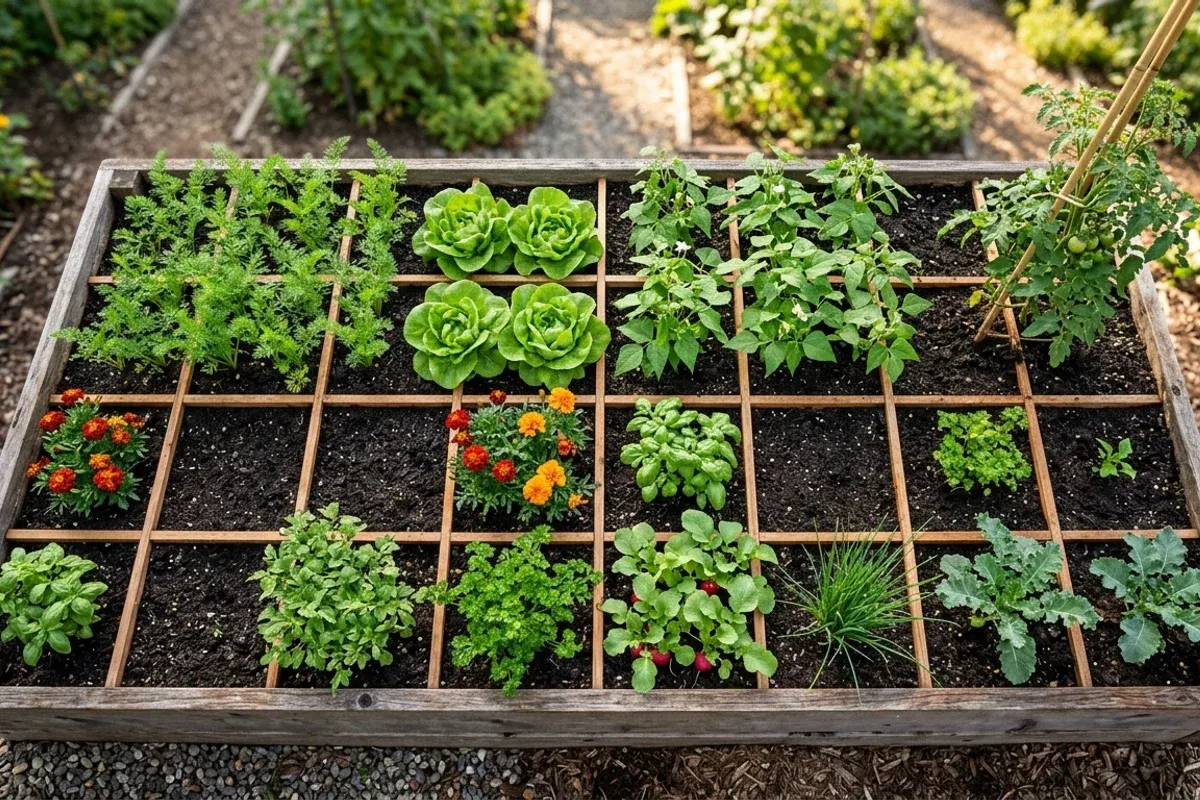
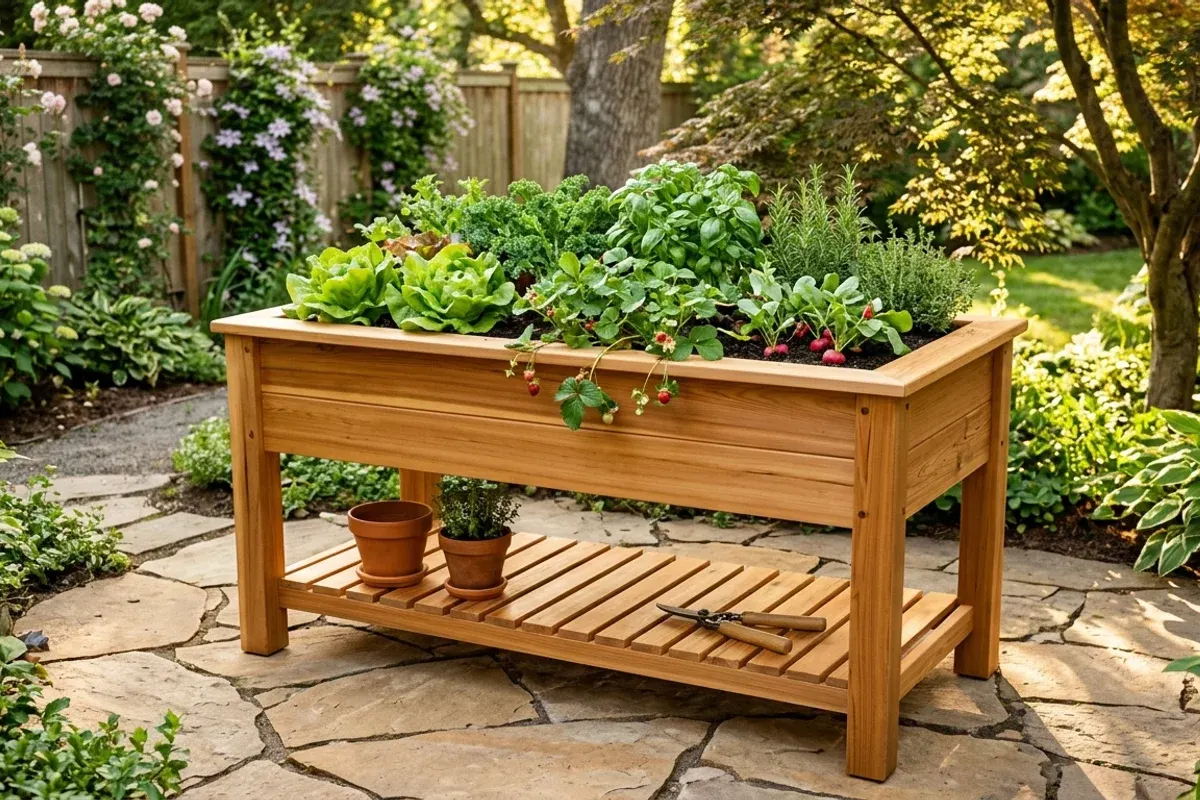
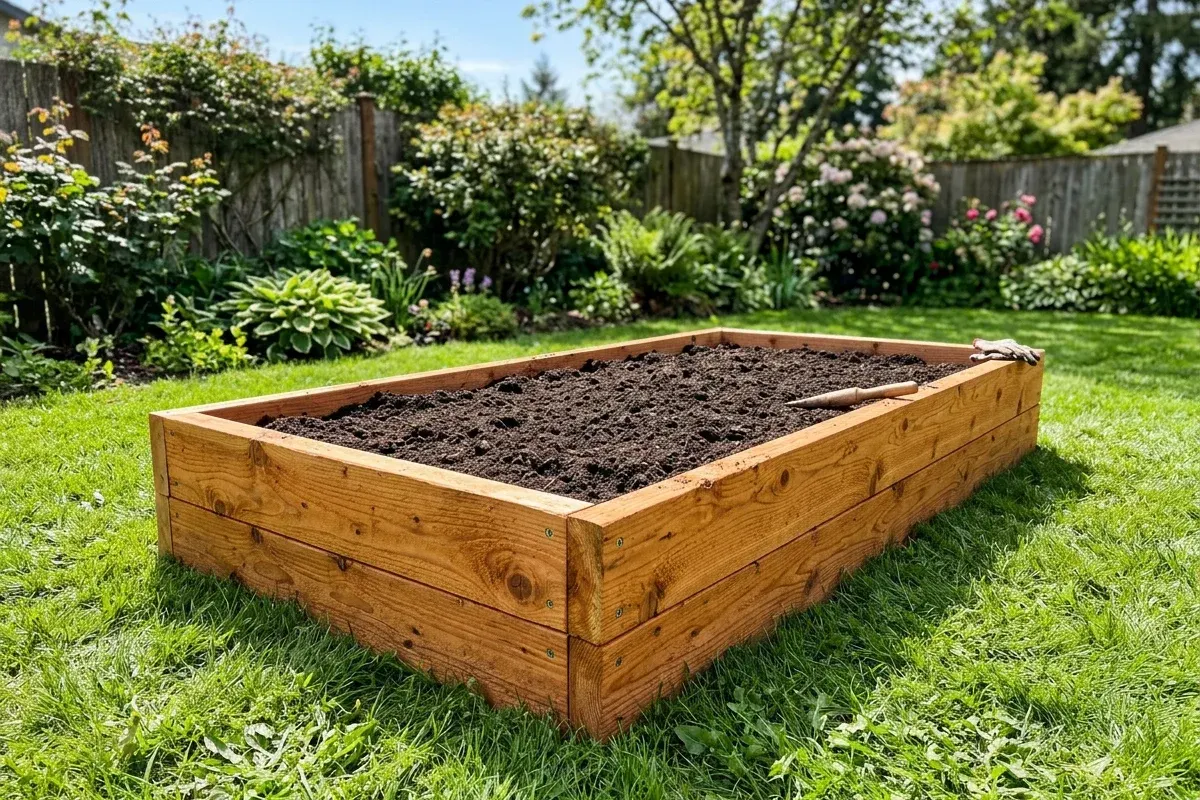
A cedar raised garden bed with integrated perimeter bench seating solves this physical strain completely. By elevating the bed walls to 18 inches and crowning the rim with a smooth, mitered 2x6 top cap railing, you create a permanent, comfortable wooden bench that wraps around all four sides. You can sit comfortably while seeding spring radishes, thinning lettuce, pruning indeterminate tomatoes, or enjoying your morning coffee.
In addition to ergonomics, the wide top cap serves an essential structural engineering function: it acts as a rigid continuous horizontal beam, preventing long 8-foot cedar planks from bowing outward under thousands of pounds of wet soil pressure.
Bench Rail Ergonomics & Structural Cross-Section
When building a seating ledge, balancing the inward and outward overhang ensures both comfortable sitting and adequate shade protection for topsoil:
               BENCH SEAT TOP CAP CROSS-SECTION
  ==============================================================
  [ Outer Overhang 2.5" ] | [ 1.5" Wall ] | [ Inner Lip 1.5" ]
  <------------------ 5.5" Total Width (2x6) ------------------>
  ==============================================================
                          |             |
                          | 2x10 Cedar  | <--- Moist Garden Soil
                          | Sidewall    |
                          |             |
                          +-------------+
                          | 4x4 Corner  |
                          | Post Inside |
  ==============================================================
- Finished Bench Height: 18" to 19" (achieved by stacking two tiers of 2x10 cedar boards or two tiers of 2x8 boards).
- Seat Ledge Width: 5.5 inches (nominal 2x6) creates an unyielding wooden plank capable of supporting 300+ lbs.
- Outer Cantilever: 2.5-inch outward overhang provides comfortable clearance so your heels don't kick the wooden sidewall.
- Inner Cantilever: 1.5-inch inward lip shades edge soil from direct sun, reducing evaporation where delicate plant roots live.
Calculate lumber requirements and cut lists using our free Raised Bed Lumber Calculator and soil volumes with our Raised Bed Soil Calculator.
Bill of Materials & Cut List (4x8-Ft Bed with Bench Ledge)
This cut list builds an 18-inch tall 4x8-foot cedar bed with a full 2x6 mitered perimeter seating rail.
1. Cedar Sidewall Lumber
- Long Sidewalls: 4 pieces of 2x10 Western Red Cedar (8-ft length), left at full 96 inches.
- Short Endwalls: 2 pieces of 2x10 Western Red Cedar (8-ft length), cut into four 45-inch lengths.
- Corner Posts: 1 piece of 4x4 Western Red Cedar (8-ft length), cut into four 17-inch corner posts.
- Center Support Posts: Cut two 17-inch lengths from the remaining 4x4 post for center sidewall anti-bowing anchors.
2. Perimeter Seating Ledge (Top Cap)
- Long Seat Rails: 2 pieces of 2x6 Western Red Cedar (10-ft length), cut to 101 inches with 45-degree inside-to-outside miters on both ends.
- Short Seat Rails: 2 pieces of 2x6 Western Red Cedar (8-ft length), cut to 53 inches with 45-degree miters on both ends.
- Center Cross-Tie: 1 piece of 2x4 Cedar (45 inches) to tie the center 4x4 posts together.
3. Fasteners & Hardware
- Box Construction: 1 box (75 count) of 3-inch #10 exterior ceramic-coated deck screws or GRK R4 structural screws.
- Top Cap Mounting: 1 box (50 count) of 2-1/2-inch exterior pocket-hole screws (or counter-bored face screws with cedar plugs).
- Base Gopher Barrier: 36 sq ft of 1/2-inch galvanized steel hardware cloth + galvanized 1-inch staples.
Step-by-Step Construction Guide
Step 1: Cutting Lumber & Miter Precision
- Cut all 2x10 sidewall and endwall planks squarely with a circular saw or miter saw.
- Cut the six 17-inch 4x4 vertical posts.
- Miter the 2x6 Top Rails:
- Measure the exterior dimensions of your assembled box (typically 96" long by 48" wide).
- Adding a 2.5-inch outer overhang on both ends means your long 2x6 rails measure 101 inches long from long-point to long-point.
- The short 2x6 rails measure 53 inches long from long-point to long-point.
- Cut 45-degree angle miters on both ends of all four 2x6 rails using a compound miter saw.
- Sand all top cap edges with 120-grit sandpaper to round over sharp arrises for splinter-free sitting.
Step 2: Assembling the Two-Tier Sidewalls
- Lay two 17-inch 4x4 corner posts on a flat surface.
- Place two 45-inch 2x10 endwall planks across the posts, stacked tightly edge-to-edge.
- Pre-drill pilot holes and drive two 3-inch exterior screws per board into each post (4 screws per side).
- Repeat for the opposing endwall. You now have two rigid U-shaped end ladder frames.
- Stand the two end frames upright. Position the four 96-inch 2x10 long sidewalls against the exposed faces of the 4x4 posts.
- Clamp tightly and fasten with 3-inch screws.
Step 3: Installing Center Posts & Anti-Bowing Cross-Tie
Crucial Step: Never skip internal center bracing on an 8-foot bed.
- Measure to the exact center (48 inches) along the inside of both 8-foot long sidewalls.
- Fasten a vertical 17-inch 4x4 post flush against the center of each long wall using 3-inch screws driven from the exterior face.
- Position the 45-inch 2x4 horizontal cross-tie beam between the two center 4x4 posts, approximately 8 inches above the ground floor.
- Fasten the cross-tie with heavy 3-inch structural screws. This horizontal brace prevents wet soil from forcing the long walls outward.
                  INTERNAL ANTI-BOWING CROSS-TIE
  ==============================================================
  [ 4x4 Corner ] <----------- 96" Long Wall -----------> [ 4x4 Corner ]
        |                                                     |
        |             [ Center 4x4 Post ]                     |
        |                      |                              |
        |       [ 2x4 Horizontal Tie Rod (45" Long) ]         |
        |                      |                              |
        |             [ Center 4x4 Post ]                     |
        |                                                     |
  [ 4x4 Corner ] <----------- 96" Long Wall -----------> [ 4x4 Corner ]
  ==============================================================
Step 4: Installing the 2x6 Perimeter Seating Ledge
- Drill pocket holes along the underside of the 2x6 rails or plan to fasten downward through the top cap with counter-bored screws.
- Dry-fit all four mitered 2x6 rails on top of the bed walls to verify that all four 45-degree miter joints meet flush with zero gaps.
- Align the rails so you maintain a uniform 2.5-inch outward cantilever overhang around the entire perimeter.
- Drive 2-1/2-inch exterior screws from underneath through pocket holes into the top edge of the 2x10 planks and 4x4 posts (or screw downward from the top, sinking screw heads 1/4" deep and capping with cedar wood plugs).
- Fasten the mitered corners together from underneath using exterior metal miter brackets or 2-inch screws driven diagonally across the joint.
Step 5: Base Pest Barrier & Organic Soil Filling
- Place the assembled bed in its permanent garden location. Check level with a 4-foot carpenter's level; shim low corners with flat stones or dig out high soil.
- Staple 1/2-inch galvanized steel wire mesh across the bottom to permanently exclude burrowing rodents.
- Lay 2 overlapping layers of thick unwaxed cardboard over the wire to smother lawn weeds.
- Filling with Soil:
- At 18 inches deep, you do not need to buy 48 cubic feet of expensive potting soil!
- Use the Hügelkultur method: fill the bottom 6 to 8 inches with untreated hardwood logs, rotting branches, and autumn leaves.
- Top off the upper 10 to 12 inches with a premium blend of 1/3 compost, 1/3 peat moss or coconut coir, and 1/3 coarse vermiculite (approx. 27 cubic feet of soil mix).
Cost Comparison: DIY Cedar Bench Bed vs Retail Kits
| Project Component | DIY Cedar Bed with Seating | Commercial Retail Cedar Kit |
|---|---|---|
| Western Red Cedar (2x10 Planks) | $120 | $280 - $450 |
| 2x6 Perimeter Bench Lumber | $45 | Not included on standard kits |
| 4x4 Posts & Structural Fasteners | $35 | $65 (Lightweight aluminum pins) |
| Hardware Cloth Gopher Wire | $18 | $45 optional add-on |
| Total Material Investment | $218 | $390 - $560 |
Estimated DIY savings: $250+ (over 55% savings), with 3x thicker timber and integrated seating.
Related Guides & Calculators
Complete your garden layout with professional planning resources:
- Raised Bed Lumber Calculator: Calculate board footage and screw counts for custom bed dimensions.
- Raised Bed Soil Calculator: Determine bulk cubic yards and bagged soil requirements.
- Deck Material Calculator: Estimate decking planks, joists, and post footings.
- How to Build a 4x8 Raised Bed: Traditional deep timber construction plans.
- How Deep Should a Raised Bed Be?: Ergonomics vs root depth analysis.
- How to Build a Square Foot Garden: Intensive 16-square high-yield grid planting.
FAQ
What is the best height for a raised garden bed with a sitting bench?
An ideal ergonomic sitting height is 16 to 20 inches from ground grade to the top of the bench cap. This matches standard chair and sofa seat heights, allowing gardeners to sit down and stand up effortlessly without knee or hip strain.
What size lumber should be used for the perimeter seating ledge?
Use nominal 2x6 lumber (actual dimensions 1.5 x 5.5 inches) or 2x8 lumber for the top cap rails. A 2x6 provides a generous 5.5-inch wide sitting ledge that supports an adult's thighs comfortably while stiffening the bed walls against soil pressure.
Do the 8-foot long sides of a raised bed need center bracing?
Yes. An 8-foot wooden raised bed filled with damp soil exerts over 1,500 to 2,000 pounds of lateral hydraulic pressure against the sidewalls. Without a heavy-duty internal center post and a horizontal cross-tie cable or 2x4 tie rod connecting both sides, the long planks will bow outward by 2 to 3 inches within two seasons.
How do you miter the corners of the top bench cap?
Cut 45-degree angle miters on both ends of all four 2x6 top cap rails using a compound miter saw. Join the mitered corners from underneath using exterior pocket-hole screws or flat metal miter plates to prevent seasonal wood shrinkage from opening the seams.
What is the best wood for a raised garden bed with seating?
Western Red Cedar is the premier choice because natural thujaplicin oils provide 15 to 25+ years of insect and fungal rot resistance without toxic chemical preservatives. Untreated Douglas fir or yellow pine will rot within 3 to 5 years, while pressure-treated lumber (UC4A) is safe for soil contact but rougher on bare hands and clothing.