How to Build a Tiered Raised Garden Bed: 3-Tier Step Plans & Sizing

By Efraín Vega · Published November 19, 2026
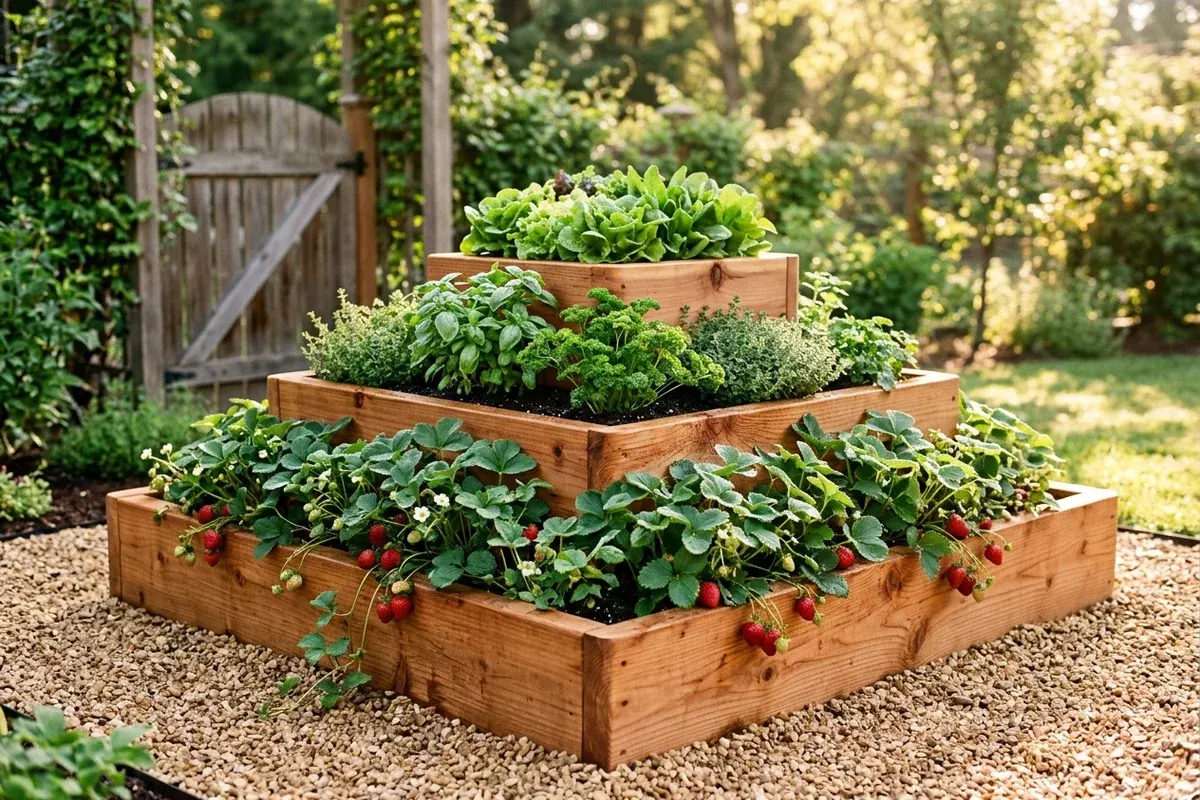
A multi-level tiered raised garden bed is the ultimate space-saving centerpiece for compact backyards, suburban patios, and homestead gardens. By stacking planting levels vertically like a wedding cake or terraced staircase, you triple your vertical growing volume within a compact 4' x 4' footprint.
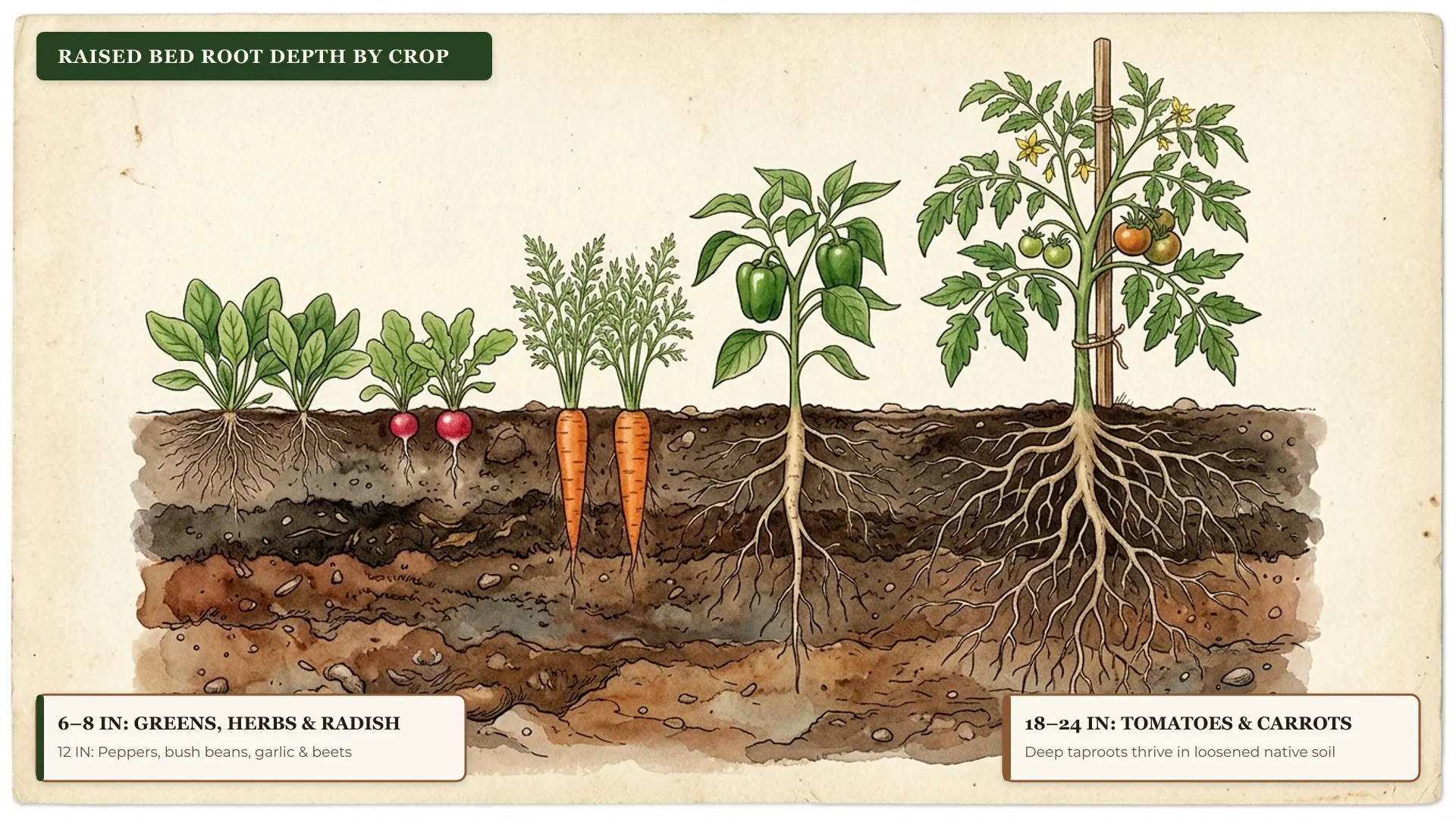
Stepped beds create distinct microclimates and root depths: shallow-rooted strawberries drape cleanly over the lower borders without rotting against damp ground, culinary herbs flourish on the intermediate terrace, and deep-rooted carrots and peppers thrive in the 21-inch deep center tier.
Using rot-resistant 2x8 Western Red Cedar, you can construct this heirloom 3-tier bed for $110 to $160 in raw lumber in a single Saturday afternoon.
3-Tier Pyramid Bed Geometry & Dimensions
                    ◄──────────── 48" (4'-0") Bottom Width ────────────►
                    ┌──────────────────────────────────────────────────┐
                    │               TIER 1 (BOTTOM FRAME)              │
                    │               48" x 48" (7-1/4" Depth)           │
                    │      ┌────────────────────────────────────┐      │
                    │      │       TIER 2 (MIDDLE FRAME)        │      │
                    │      │       36" x 36" (14-1/2" Depth)    │      │
                    │      │      ┌──────────────────────┐      │      │
                    │      │      │ TIER 3 (TOP FRAME)   │      │      │
                    │      │      │ 24" x 24" (21-3/4")  │      │      │
                    │      │      └──────────────────────┘      │      │
                    │      └────────────────────────────────────┘      │
                    └──────────────────────────────────────────────────┘
| Tier Level | Outer Dimensions | Soil Depth | Ideal Plant Varieties |
|---|---|---|---|
| Tier 1 (Bottom) | 48 in. x 48 in. (4 ft. sq.) | 7-1/4 in. | Everbearing strawberries, radishes, lettuce, spinach, thyme |
| Tier 2 (Middle) | 36 in. x 36 in. (3 ft. sq.) | 14-1/2 in. | Bush beans, onions, beets, basil, curly parsley, Swiss chard |
| Tier 3 (Top/Center) | 24 in. x 24 in. (2 ft. sq.) | 21-3/4 in. | Danvers half-long carrots, parsnips, sweet bell peppers, bush tomatoes |
Materials & Dimensional Cut List
Lumber (Western Red Cedar - S4S Kiln-Dried)
| Component | Quantity & Stock Size | Finished Cut Dimensions | Notes |
|---|---|---|---|
| Tier 1 (Bottom) | 2 pcs: 2x8 x 8 ft. | 4 pcs @ 48" | Outer perimeter foundation box |
| Tier 2 (Middle) | 2 pcs: 2x8 x 8 ft. | 4 pcs @ 36" | Intermediate terrace box |
| Tier 3 (Top) | 1 pc: 2x8 x 8 ft. | 4 pcs @ 24" | Center deep-root box |
| Corner Cleats | 1 pc: 2x2 x 8 ft. | 12 pcs @ 7" | Internal corner fastening cleats |
| Vertical Locking Stakes | 1 pc: 2x4 x 8 ft. | 4 pcs @ 21" | Internal uprights locking the 3 tiers together |
Hardware & Supplies
- Screws: 3-inch #9 or #10 exterior ceramic-coated star-drive wood screws (1 lb box, ~100 screws).
- Gopher / Vole Barrier: 1/2-inch galvanized hardware cloth (4 ft. x 4 ft. sheet).
- Weed Barrier: 4-ounce non-woven geotextile landscape fabric (5 ft. x 5 ft. sheet).
- Soil Mix: 21.5 cu. ft. (approx. 22 bags of 1 cu. ft. container potting soil or 0.8 cubic yards of bulk Mel's Mix).
Calculate your exact board feet and soil volumes using our interactive Raised Bed Lumber Calculator and Raised Bed Soil Calculator.
Step-by-Step Construction Plans
Step 1: Ground Preparation & Rodent Barrier
- Select a level garden site that receives 6 to 8 hours of direct daily sunlight.
- Clear away sod, turf grass, and weeds across a 5x5-foot area.
- Tamp the ground flat and verify level in both directions with a 4-foot carpenter's level.
- Lay Gopher Wire: Roll out a 4x4-foot sheet of 1/2-inch galvanized steel hardware cloth directly over the cleared dirt. This heavy wire mesh permanently prevents burrowing rodents (moles, voles, and gophers) from digging up into your strawberry root beds from below.
Step 2: Build the Bottom Box (Tier 1: 48" x 48")
- Lay out the four 48-inch 2x8 boards on edge in a square.
- Fasten each corner using a butt-joint configuration: pre-drill three countersunk holes per corner and drive 3-inch exterior wood screws into the mating end grain.
- For heavy-duty longevity, screw a 7-inch 2x2 cedar cleat vertically inside each of the four interior corners. Driving screws through the outer boards into the interior 2x2 cleat prevents end-grain screw pullout when damp soil expands.
- Check diagonal measurements across opposite corners: both diagonals must measure 67-7/8 inches to verify the box is dead square.
- Set Tier 1 onto your prepared site directly atop the hardware cloth.
                   CORNER CLEAT FASTENING DETAIL

               2x8 Face Board
          ──────────────────────┐
                                │
                                │ 3" Structural Screws
                                ▼
                         ┌──────┬──────┐
                         │ 2x2  │ 2x8  │
                         │ Cleat│ Side │
                         │      │ Board│
                         └──────┴──────┘
Step 3: Build the Middle Box (Tier 2: 36" x 36")
- Assemble the four 36-inch 2x8 cedar boards into a 36x36-inch square using corner butt-joints and 2x2 internal cleats.
- Verify diagonals measure 50-7/8 inches (square).
- Center the 36-inch Tier 2 box inside the 48-inch Tier 1 box:
- There should be an exact 6-inch planting margin between the outer walls of Tier 2 and the inner walls of Tier 1 on all four sides.
- Fasten Tier 2 to Tier 1 using four 21-inch 2x4 vertical locking stakes:
- Place one 2x4 upright against the interior center of each Tier 2 wall, extending downward to touch the ground inside Tier 1.
- Drive 3-inch screws through the 2x4 stake into both Tier 1 and Tier 2. This ties the boxes into a single, unified rigid unit that cannot shift or twist when filling with soil.
Step 4: Build & Mount the Top Box (Tier 3: 24" x 24")
- Assemble the four 24-inch 2x8 cedar boards into a 24x24-inch square using corner butt-joints and 2x2 cleats.
- Verify diagonals measure 33-15/16 inches (square).
- Center Tier 3 atop Tier 2, maintaining an exact 6-inch planting margin on all four sides.
- Screw the top box into the four 2x4 vertical locking stakes using 3-inch exterior screws.
- The three-tiered wooden structure is now completely locked together into a solid pyramidal terraced frame.
                    TIER LOCKING UPRIGHT DETAIL

                     [ Tier 3 (24") ]
                           │
                     ┌─────┴─────┐
                     │ 2x4 Stake │ ◄── 21" Vertical Upright
                     │           │     (Screwed into All 3 Tiers)
                     └─────┬─────┘
                           │
                     [ Tier 2 (36") ]
                           │
                     [ Tier 1 (48") ]
               ────────────┴────────────
                     Ground Level
Step 5: Soil Mix Recipe & Filling Strategy
Never fill raised planter beds with dense backyard clay or unamended topsoil. In a tiered container, heavy soil compacts into concrete, choking delicate strawberry roots and stopping drainage.
Use the proven Mel's Mix Formula (Equal Parts by Volume):
- 1/3 Screened Organic Compost (blend 3–4 compost types: mushroom compost, worm castings, composted cow manure, and plant compost).
- 1/3 Coarse Horticultural Vermiculite (or perlite) for permanent moisture retention and pore aeration.
- 1/3 High-Grade Sphagnum Peat Moss (or washed coconut coir) for moisture wicking and light organic texture.
Filling Instructions
- Fill the bottom tier first, lightly watering down the soil with a spray nozzle to settle air pockets.
- Fill the middle tier, then the center top tier.
- Fill soil to within 1 inch of the top cedar rim on all tiers to prevent irrigation overflow.
Step 6: Planting Layout & Drip Irrigation Tips
- Bottom Tier (Strawberries & Groundcovers): Plant 12 to 16 everbearing strawberry crowns spaced 10 inches apart around the perimeter. As runner vines emerge, let them drape over the cedar rim. The warm cedar wood warms the fruit, keeping berries completely off the damp soil to prevent mold and slug damage.
- Middle Tier (Culinary Herbs & Greens): Plant Italian basil, curly parsley, chives, oregano, and cut-and-come-again butterhead lettuce.
- Top Tier (Deep Taproots): Plant Danvers carrots, parsnips, or a single compact bell pepper plant in the center where soil depth reaches an impressive 21 inches.
- Automated Drip Lines: Lay a continuous loop of 1/4-inch inline emitter tubing across all three tiers connected to a garden hose timer. Follow our complete setup guide: How to Install Raised Bed Drip Irrigation.
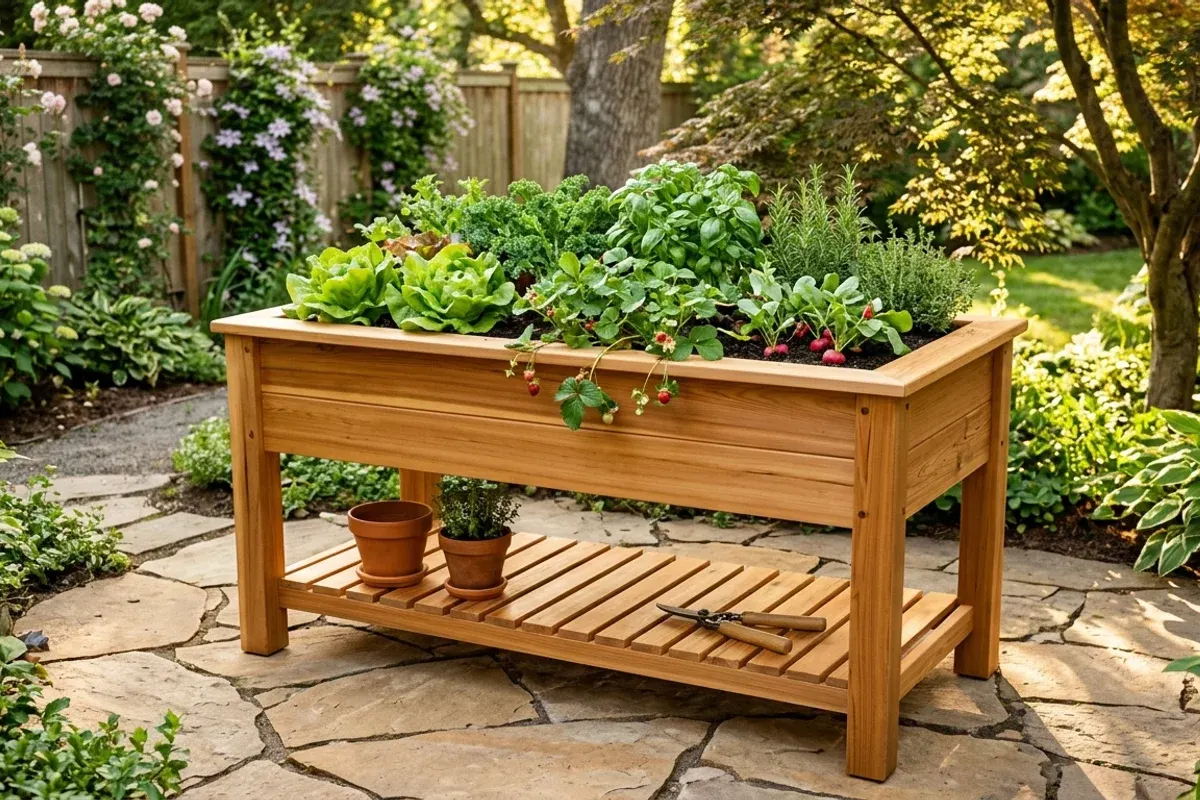
Your handcrafted tiered cedar garden bed will provide lush, pest-free, high-yield harvests season after season. If you prefer a standing design with zero bending or kneeling, explore our companion blueprints: How to Build an Elevated Raised Garden Bed on Legs.
FAQ
What are the standard dimensions for a 3-tiered raised garden bed?
The classic concentric pyramid design uses a 4x4-foot bottom tier, a 3x3-foot middle tier, and a 2x2-foot top tier. Built with 2x8 dimensional cedar lumber (7-1/4 inch actual width), this creates finished planting depths of 7.25 inches on the outer perimeter, 14.5 inches in the middle tier, and 21.75 inches in the center tier.
How much soil is needed for a 4x4 3-tier raised bed?
A 4x4 3-tier pyramid bed built with 2x8 lumber holds approximately 21.5 cubic feet of soil mix (0.80 cubic yards, or about 22 standard 1-cubic-foot retail bags). Because the tiers share open vertical space inside, you do not need solid wooden bottom floors between tiers, which allows deep roots to penetrate fully into lower levels.
What crops grow best in a tiered raised bed?
Tiered beds are ideal for high-density vertical planting: grow shallow-rooted cascading strawberries and trailing thyme on the bottom tier (where berries hang cleanly over the cedar edges); salad greens, bush beans, and cilantro in the 14-inch middle tier; and deep-rooted heirloom carrots, parsnips, or compact peppers in the 21-inch center tier.
Do you need a floor under each tier of a stepped garden bed?
No. The interior of the bed should remain open between tiers. Leaving the tiers open allows earthworms and beneficial mycorrhizal fungi to migrate vertically, ensures seamless gravitational drainage without waterlogging, and allows deep taproots to reach down 20+ inches into native soil.
What is the best wood species for building tiered beds?
Western Red Cedar and Northern White Cedar are the premier species due to natural aromatic thujaplicin oils that resist moisture rot, termites, and fungal decay for 15 to 20 years without chemical preservatives. Redwood is equally rot-resistant in western regions. If using yellow pine or fir, the wood must be sealed with non-toxic, food-safe silicone or pine-tar sealants to avoid rotting within 3 seasons.