How to Build a Decomposed Granite Patio: Depth, Base & Stabilizer Guide

By Efraín Vega · Published November 19, 2026
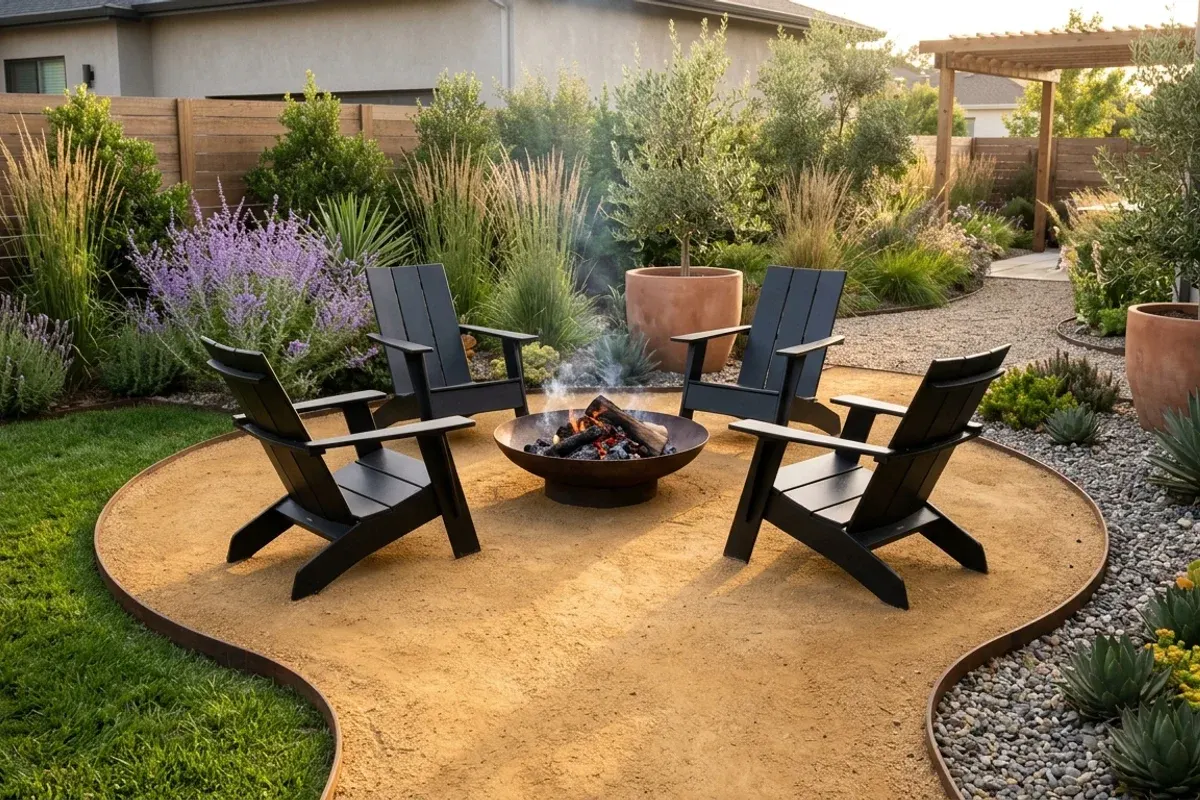
Decomposed granite (DG)—the naturally weathered, crushed granite aggregate renowned for its warm golden-buff and terracotta tones—is the undisputed king of modern permeable hardscapes. It offers the relaxed, rustic elegance of French country gravel terraces while providing a firmer, smoother walking surface that won't roll beneath patio chair legs like round river pebbles.
However, a poorly installed DG patio can quickly degenerate into a muddy, rutted quagmire after a weekend downpour.
To achieve a rock-hard, erosion-proof decomposed granite patio that lasts for decades, you must execute three non-negotiable fundamentals: installing rigid containment edging, blending an organic stabilizer, and compacting in thin, moisture-calibrated lifts.
1. The 3 Types of Decomposed Granite
Before ordering bulk materials from your local stone quarry or landscape supply yard, understand the three commercial grades:
+-------------------------------------------------------------------------+
|                  DECOMPOSED GRANITE SPECIFICATION MATRIX                |
+-------------------------------------------------------------------------+
| Type               | Description               | Best Use Cases        |
|--------------------+---------------------------+-----------------------|
| 1. Natural Loose DG| Raw crushed granite       | Tree rings, low-cost  |
|                    | (1/4" minus with dust)    | woodland trails       |
|--------------------+---------------------------+-----------------------|
| 2. Stabilized DG   | Blended with organic      | Patios, fire pits,    |
|    (Recommended)   | plant binder / enzymes    | outdoor dining courts |
|--------------------+---------------------------+-----------------------|
| 3. Resin-Coated DG | Blended with clear        | Commercial plazas,    |
|                    | polymer epoxy resins      | driveways, ADA ramps  |
+-------------------------------------------------------------------------+
For residential backyard patios, Stabilized Decomposed Granite is the gold standard. It retains a natural, earthy texture and high water permeability while preventing the irritating dust migration and muddy shoe tracking associated with standard loose DG.
2. Cross-Section Anatomy of a Stable DG Patio
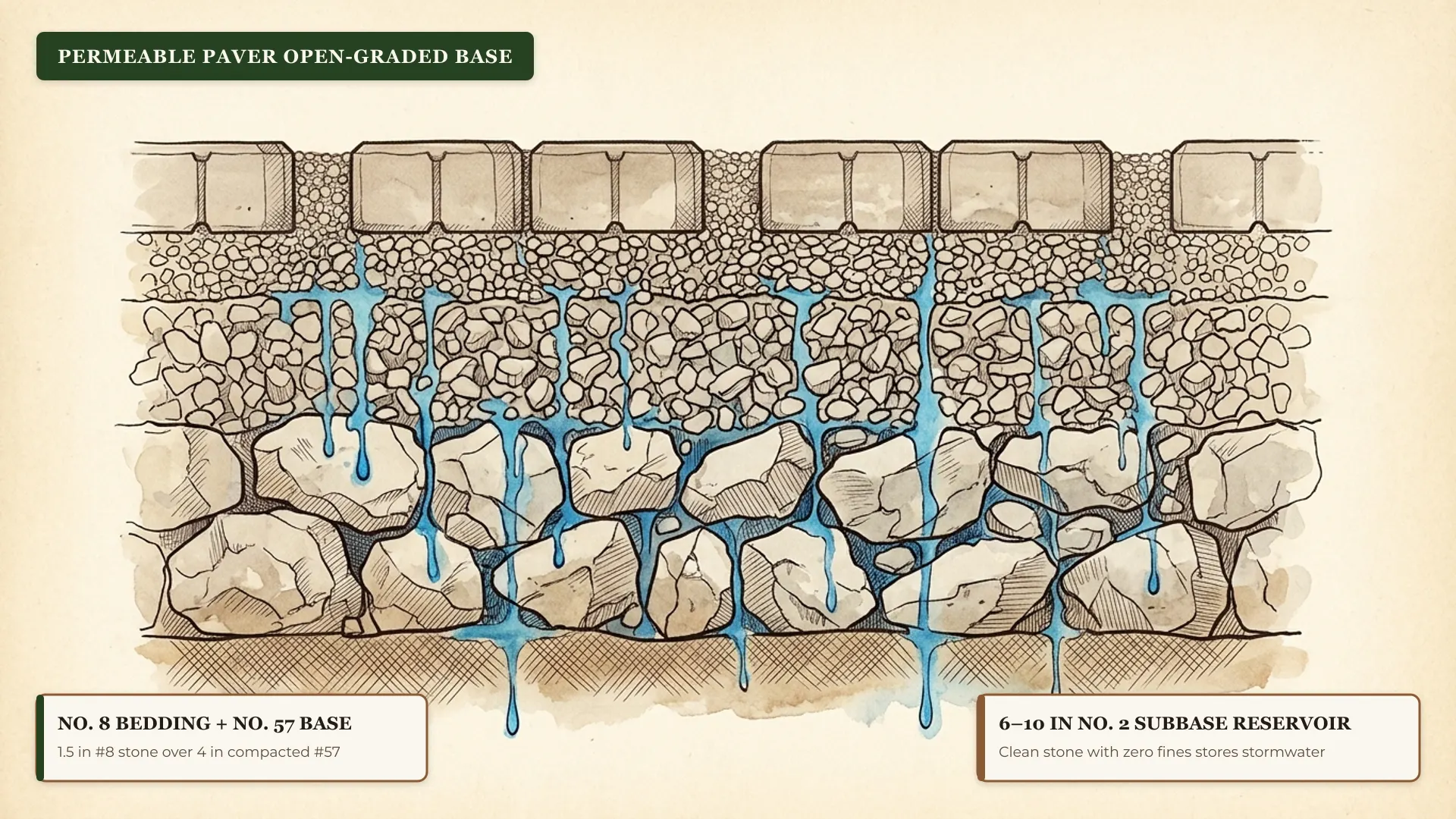
A long-lasting patio relies on a stratified sub-base that provides drainage and load distribution:
+-------------------------------------------------------------+
| [Corten Steel Edging]                 [Corten Steel Edging] |
|  |                                                   |  |   |
|  |  2.5" - 3.0" Compacted Stabilized DG Surface      |  |   |
|  |  (Compacted in two 1.5" lifts at 95% density)     |  |   |
|  |===================================================|==|   |
|  |  2.0" - 3.0" Compacted #21A Crusher Run Road Base |  |   |
|  |---------------------------------------------------|--|   |
|  |  Heavy-Duty Non-Woven Geotextile Fabric (4–6 oz)  |  |   |
|  +---------------------------------------------------+--+   |
|      Compacted Native Subsoil (Pitched 1/8" per Foot Fall)  |
+-------------------------------------------------------------+
Essential Engineering Guidelines:
- Total Excavation Depth: 5 to 6 inches below adjacent lawn grade.
- Subgrade Pitch: Grade a uniform 1% to 2% slope (1/8 to 1/4 inch vertical drop per linear foot) away from house foundations. Even though DG is permeable, heavy storm deluges must drain via gravity without ponding against wall ledgers.
- Rigid Edging Containment: Unconfined DG will blow out along the edges within months. Corten steel edging, heavy commercial aluminum, or concrete paver curbing is mandatory.
- Geotextile Separation: 4-ounce non-woven needle-punched geotextile prevents the dense road base from migrating downward into clay subsoils.
3. Tools & Materials Checklist
Materials:
- Stabilized Decomposed Granite (1/4" minus): Screened with stone fines and organic binder.
- Base Aggregate: #21A crushed stone, 3/4-inch crusher run, or dense-grade road base.
- Landscape Edging: 14-gauge Corten steel edging (4- to 5-inch depth) with 12-inch heavy anchor stakes. Check our Landscape Edging Installation Guide for fastening specs.
- Landscape Fabric: Commercial non-woven polypropylene geotextile.
- Water Supply: Garden hose equipped with a fine misting shower nozzle.
Tools:
- Rented Vibrating Plate Compactor (or hand tamper for small areas)
- Landscape rake and flat aluminum lute rake
- Long bubble level (4-foot box level) or laser level
- Mason string line and wood grade stakes
- Spade and wheelbarrow
4. Step-by-Step Construction Guide
Step 1: Excavation & Grading
- Stake out the patio perimeter and excavate 5 to 6 inches deep.
- Scrape the native soil base completely flat, establishing a 1% slope (1 inch drop every 8 to 10 feet) sloping away from the residence.
- Run the plate compactor over the bare soil to create a firm, unyielding foundation.
Step 2: Install Geotextile Fabric & Rigid Edging
- Roll out non-woven geotextile fabric over the compacted soil, overlapping edges by 12 inches.
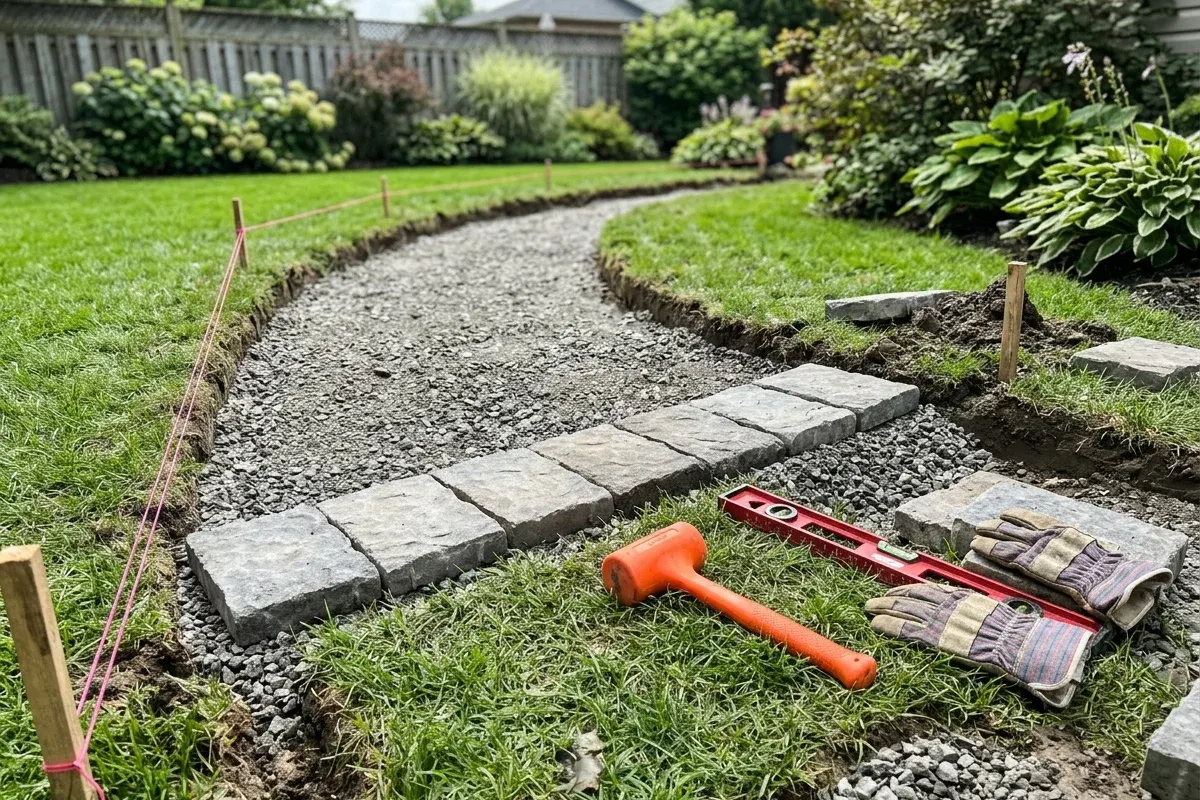
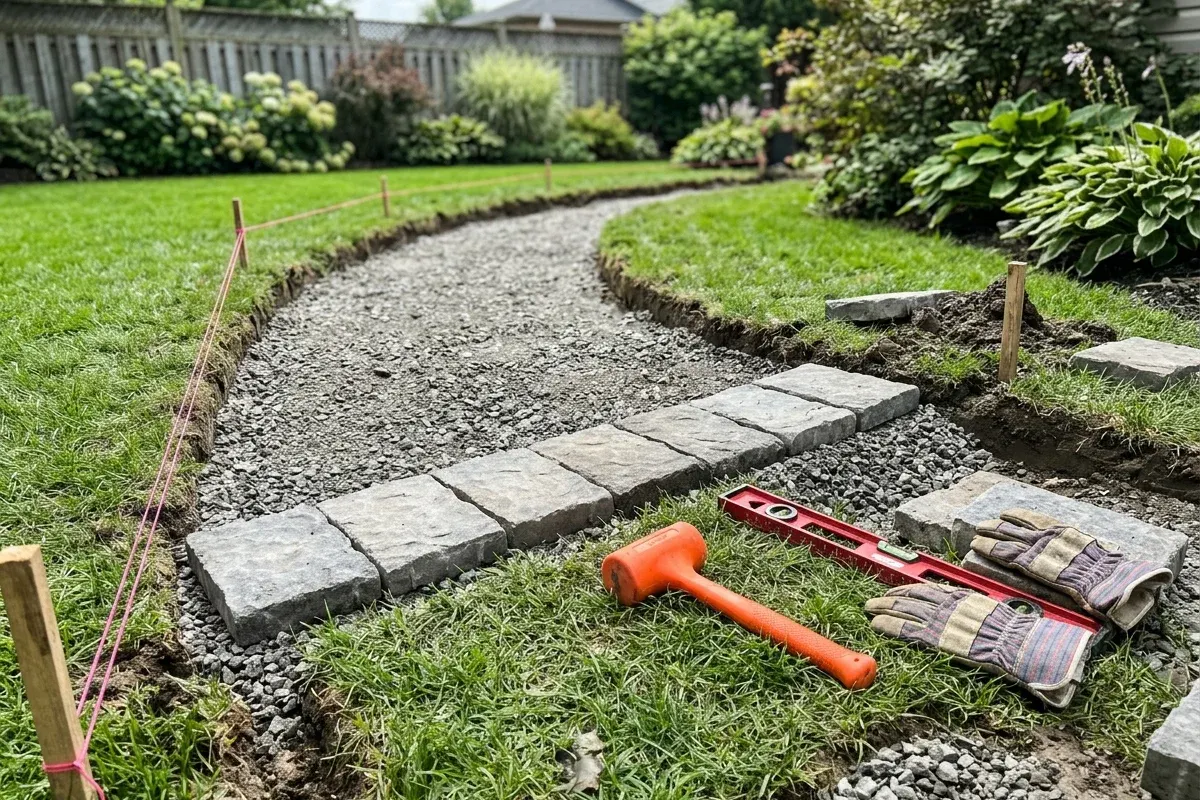
- Install your landscape edging along the perimeter. Drive 12-inch stakes every 2 to 3 feet.
- Set the top edge of the border 1/4 to 1/2 inch above the finished patio grade to catch loose surface gravel while maintaining a clean, modern aesthetic.
Step 3: Install the Aggregate Sub-Base
- Spread 2 to 3 inches of #21A crushed stone / crusher run aggregate across the patio footprint.
- Lightly mist the stone with water to lubricate dust particles.
- Make 3 to 4 overlapping passes with the vibrating plate compactor until the base is rock-hard and does not yield under foot traffic.
Step 4: The Secret to Spreading & Wetting DG
Never dump and compact dry decomposed granite, and never soak it into mud. The secret to rock-hard compaction is the brown sugar moisture test:
- Shovel the first 1.5-inch lift of stabilized DG onto the base.
- Smooth it evenly across the patio using a flat landscape lute rake.
- Using a hose with a fine shower nozzle, spray the DG evenly until moisture penetrates the entire lift.
- The Moisture Test: Grab a handful of damp DG and squeeze firmly. It should hold its shape like moist brown sugar without squeezing water between your fingers. If water drips, it is too wet; let it dry for 1 hour. If it crumbles, mist more water.
                  THE "BROWN SUGAR" MOISTURE TEST
+--------------------+-------------------------+----------------------+
| Too Dry            | Perfect (Brown Sugar)   | Too Wet (Mud)        |
|--------------------+-------------------------+----------------------|
| Crumbles loosely;  | Clumps firmly into ball;| Squeezes muddy water |
| dust flies during  | no water drips out;     | between fingers;     |
| plate compaction.  | compacts to rock.       | sticks to compactor. |
+--------------------+-------------------------+----------------------+
Step 5: Compacting the DG in Lifts
- Run the plate compactor over the first 1.5-inch lift in circular overlapping spirals. Make at least 3 passes.
- Spread the second 1.5-inch lift of DG to bring the patio to its final finished height.
- Moisten with the fine mist spray until evenly damp.
- Make another 4 to 5 passes with the plate compactor.
- Finish with a final light misting to rinse fine dust particles into the microscopic surface voids, locking the stone matrix tight.
- Curing: Allow the patio to dry and cure undisturbed for 24 to 48 hours before placing heavy furniture or walking on the surface.
5. Material Volume Estimation Matrix
Decomposed granite compacts by approximately 15% to 20% when tamped. When ordering bulk aggregate, always include a 15% compaction buffer.
For a standard 12 × 16 ft patio (192 sq ft):
| Material Layer | Target Compacted Depth | Loose Material Needed | Calculator Reference |
|---|---|---|---|
| Crushed Road Base (#21A) | 2.5 inches | ~1.75 cubic yards (2.5 tons) | Gravel Calculator |
| Stabilized DG Surface | 2.5 inches (with 15% comp.) | ~1.75 cubic yards (2.6 tons) | Gravel Calculator |
| Landscape Edging | 56 linear feet perimeter | 56 ft Corten steel + 28 stakes | Landscape Edging Calculator |
| Geotextile Fabric | 192 sq ft + 10% overlap | ~215 sq ft roll | Gravel Calculator |
Tonnage Weight Rule
Decomposed granite weighs approximately 1.4 to 1.5 tons per cubic yard (around 110–120 lbs per cubic foot). Use our Gravel & Aggregate Calculator to calculate exact dump truck deliveries.
6. Long-Term Maintenance & Care
- Chair Leg Protection: Heavy point loads (like thin iron chair legs) can dig into DG over time. Use broad plastic furniture glides or wooden deck-style pads under outdoor furniture legs.
- Leaf Cleanup: Avoid dragging steel leaf rakes across the DG surface. Use a handheld leaf blower on low throttle to glide autumn leaves off the patio floor without dislodging the compacted aggregate.
- Surface Refresh: After 4 to 6 years of intense exposure, sprinkle a 1/2-inch layer of fresh stabilized DG, mist lightly with water, and re-compact with a plate compactor to restore a brand-new showroom finish.
Related Guides & Calculators
- How to Build a DIY Paver Fire Pit with Steel Ring
- How to Install Landscape Edging: Steel, Aluminum & Stone
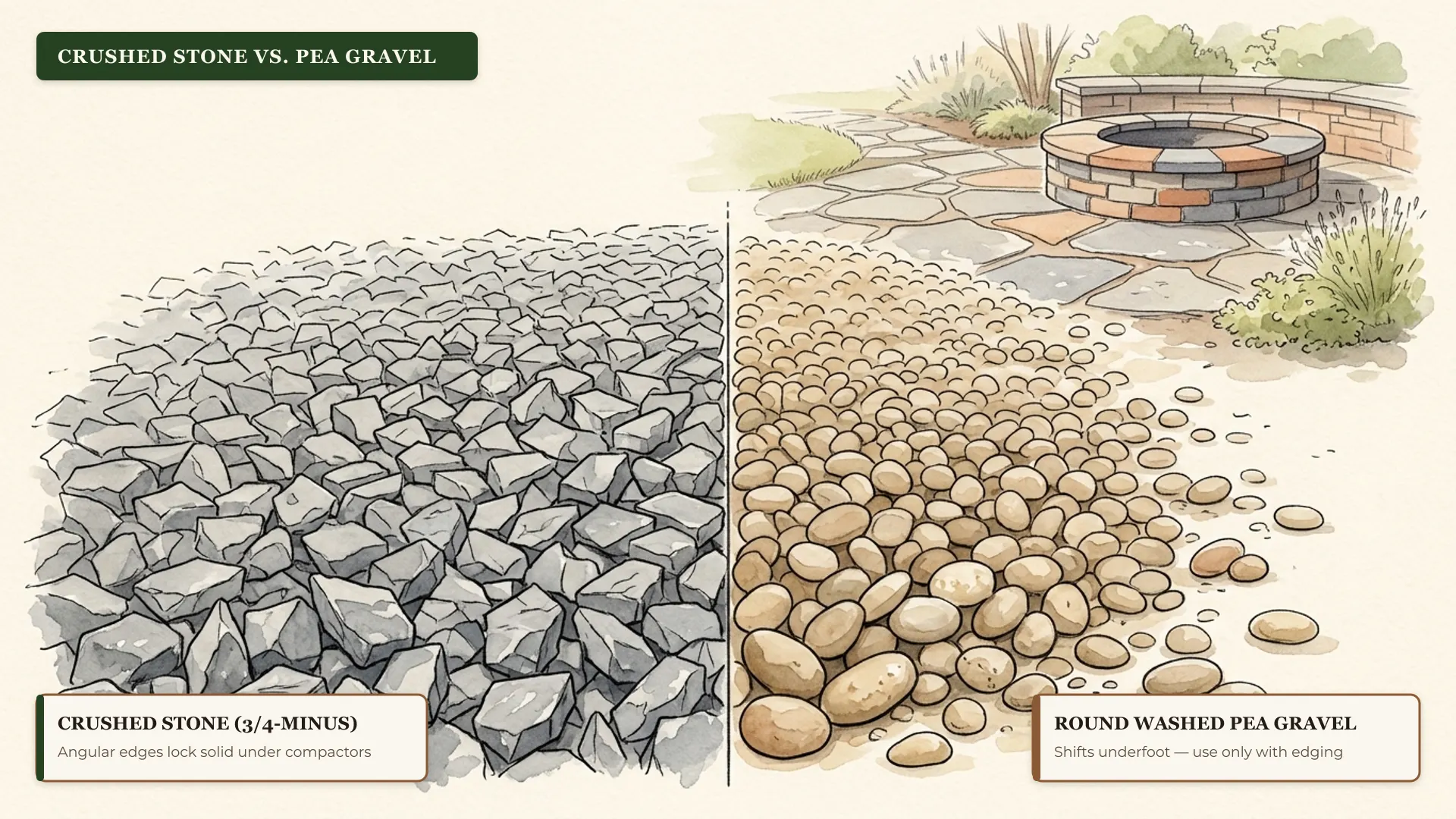
- Crushed Stone vs. Pea Gravel for Patio Base & Fire Pit
- How to Build a Stepping Stone Walkway with Pea Gravel
- How to Build a Gravel Walkway: Depth, Base & Edging
Sources: University of Arizona Cooperative Extension — Permeable Granite Pavements, Colorado State University Extension — Gravel & DG Landscape Design, National Stone, Sand & Gravel Association (NSSGA) Technical Guides.
FAQ
How thick should decomposed granite be for a patio?
A decomposed granite patio requires a total compacted depth of 2.5 to 3 inches of stabilized DG over a 2-inch compacted aggregate road base (#21A or crusher run). Laying less than 2 inches results in rutting beneath patio furniture legs and premature erosion during rainstorms.
What is the difference between standard DG and stabilized DG?
Standard natural DG consists of crushed granite flakes and stone dust; while it compacts well, heavy rain softens it and loose grit tracks into the house on shoe soles. Stabilized DG is factory-premixed with a natural organic binder (such as plant-based psyllium husk or pine resin) that binds the stone particles into a firm, pavement-like surface that resists erosion while retaining 100% water permeability.
Do you need a base under a decomposed granite patio?
Yes. While small secondary garden pathways can get away with 3 inches of DG directly on geotextile fabric, an outdoor patio supporting patio tables, heavy fire pits, and foot traffic requires a 2- to 3-inch compacted road base (#21A crushed stone with fines) underneath. Without an aggregate sub-base, saturated subsoil will pump mud upward, softening the patio floor.
Can you use a hand tamper instead of a plate compactor for DG?
For small walkways under 50 square feet, a hand tamper can suffice with extra elbow grease. However, for a patio, a rented vibrating plate compactor (minimum 3,000 lbs centrifugal force) is strongly recommended. Decomposed granite requires massive compaction pressure to interlock the angular stone fines and achieve true structural hardness.