Crushed Stone vs Pea Gravel: Differences for Patios & Fire Pits

By Efraín Vega · Published November 19, 2026
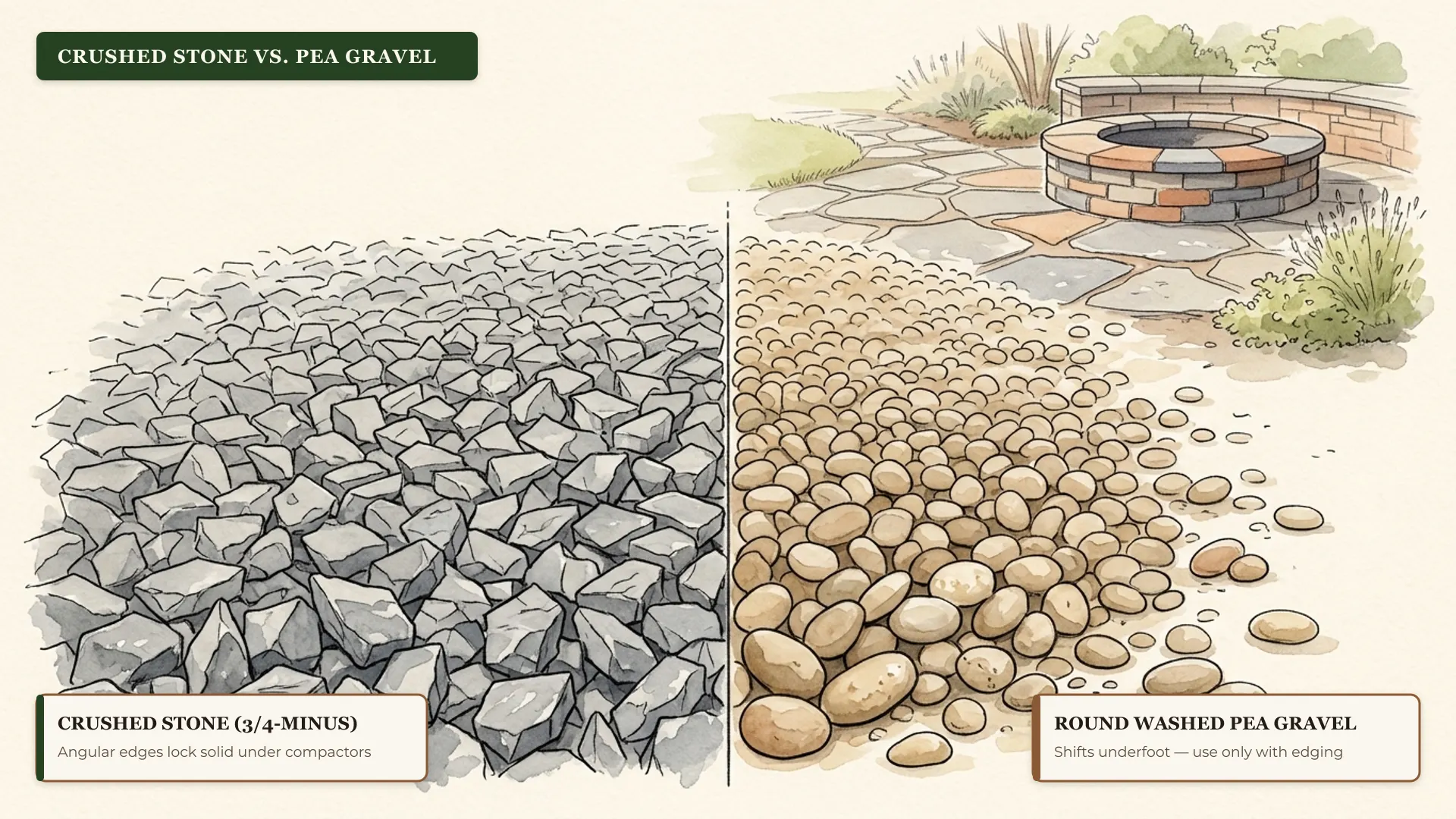
When designing a gravel walkway, patio, or backyard fire pit, homeowners are frequently caught between crushed stone and pea gravel.
While both aggregates cost roughly the same per ton at landscape supply yards, they behave completely differently once spread across the ground. Choosing the wrong stone can leave you with wobbly patio furniture, shifting paver borders, or aggregate kicked across your lawn every time someone walks outside.
The Engineering Difference: Shape & Interlocking
The fundamental difference between these two aggregates comes down to particle geometry:
- Crushed Stone (Angular & Fractured): Quarried limestone, granite, or trap rock crushed by industrial machinery. Each stone has sharp 90-degree corners, jagged facets, and flat planes. Under mechanical compaction (or regular foot traffic), these angular surfaces wedge into each other—a mechanical phenomenon called aggregate interlock.
- Pea Gravel (Rounded & Smooth): River rock formed by centuries of natural aquatic erosion. Each pebble is rounded, polished, and oblong. Because there are no flat edges or rough textures, individual pebbles slide across each other under pressure rather than binding together.
Direct Comparison Table
| Attribute | Crushed Stone (#57 / 3/8" Chips) | Pea Gravel (3/8" River Pebble) |
|---|---|---|
| Shape | Sharp, angular, faceted edges | Smooth, rounded, polished |
| Compaction Ability | High (Binds into a solid walking crust) | Near Zero (Rolls like marbles) |
| Chair & Furniture Stability | Excellent (Legs rest firmly on top) | Poor (Chair legs sink 2–3 inches) |
| Barefoot Comfort | Sharp; uncomfortable without shoes | Smooth; comfortable on bare skin |
| Paver Base Suitability | Excellent (#21A crusher run / #57 stone) | Unacceptable (Causes pavers to fail) |
| Drainage Permeability | 100% permeable (clean stone) | 100% permeable |
| Migration & Washout | Low (Locks together against stormwater) | High (Easily swept away by rain) |
| Weed Resistance | Moderate (Add geotextile fabric beneath) | Moderate (Must use underlayment) |
Best Applications for Each Aggregate
When to Choose Crushed Stone:
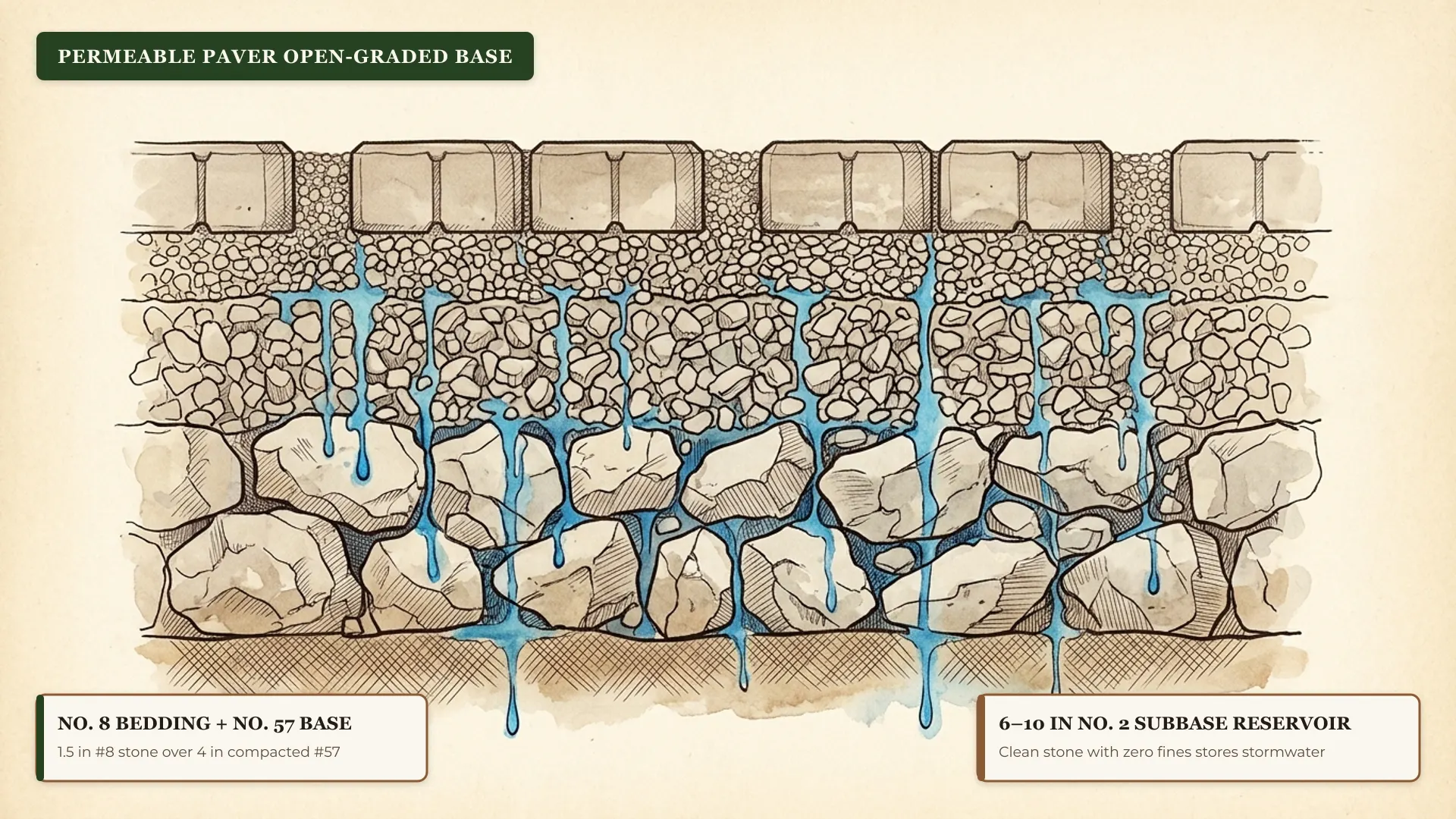
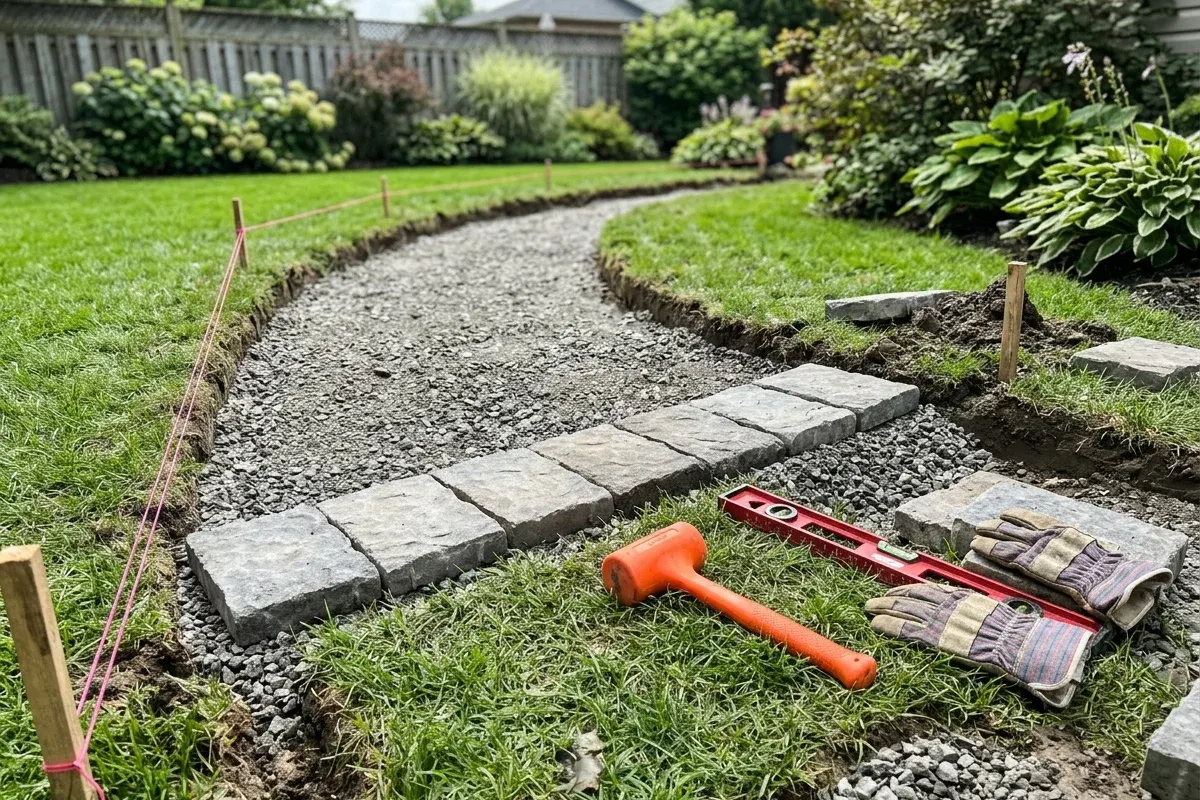
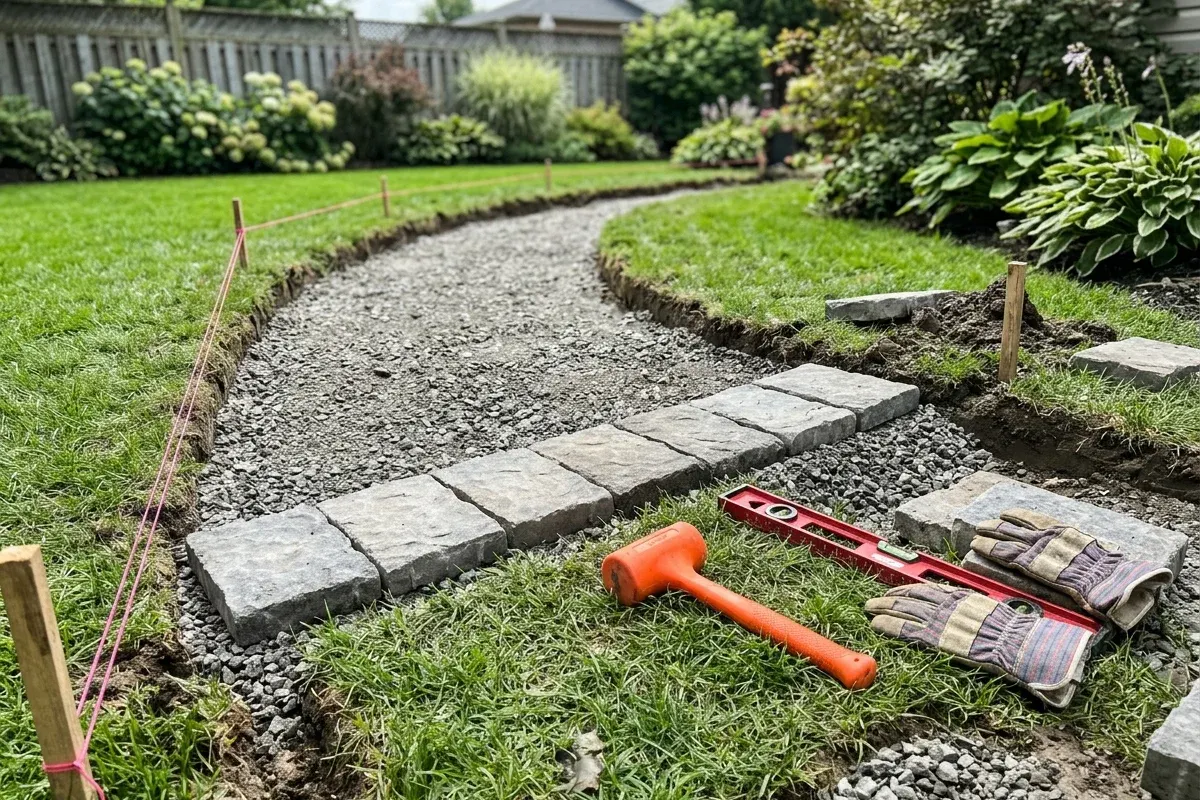
- Paver Patio & Walkway Sub-Bases: Clean crushed stone (#57) or dense crusher run is the mandatory foundation under concrete pavers, flagstone, and brick walkways.
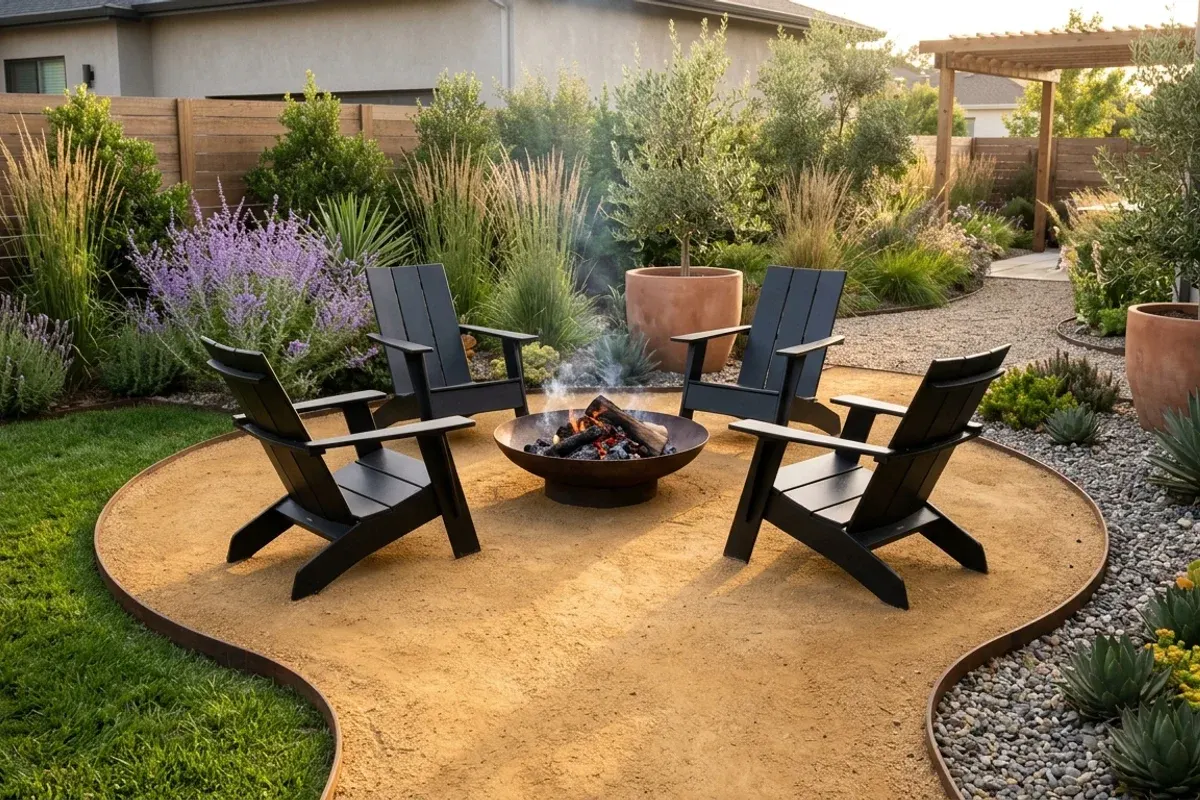
- Backyard Fire Pit Seating Areas & Terraces: A 3-inch layer of 3/8-inch crushed stone or stabilized decomposed granite creates a rock-hard, non-tipping surface for heavy Adirondack chairs and metal fire bowls. For full plans, see our guide on How to Build a Decomposed Granite Patio.
- Driveways & Utility Shed Bases: Angular rock supports multi-ton vehicle weights and shed skids without rutting or displacement.
When to Choose Pea Gravel:
- Barefoot Garden Paths & Zen Gardens: If you want a soft, decorative path between raised vegetable beds that feels pleasant under light sandals or bare feet.
- Drainage Swales & French Drain Caps: Rounded stones provide aesthetic ground cover over perforated drain pipes without tearing landscape fabric.
- Children's Play Areas & Dog Runs: Smooth pebbles are gentle on pets' paws and will not scrape skin if children tumble.
How to Calculate Quantities for Your Project
Both crushed stone and pea gravel have a bulk density of approximately 1.35 to 1.45 tons per cubic yard.
Tons = Length (ft) × Width (ft) × Depth (in ÷ 12) ÷ 27 × 1.4
Use our Gravel Calculator to get exact cubic yards, tons, and retail 50 lb bags for your path or patio project, or check our Fire Pit Calculator to plan a complete stone fire ring build.
FAQ
Can you use pea gravel as a base for pavers?
No. Never use pea gravel as a structural base for paver patios, walkways, or retaining walls. Pea gravel consists of rounded, river-washed pebbles that cannot lock together. When pavers are installed over pea gravel, the stones roll like ball bearings, causing pavers to shift, wobble, and sink unevenly underfoot.
Which gravel is best around a fire pit?
Angular crushed stone (such as 3/8-inch bluestone chips or decomposed granite) is best for outdoor fire pit seating areas because it compacts into a firm, stable floor where patio chairs won't sink or tip. Pea gravel can be used for decorative borders, but patio chairs sink deeply into it.
What is the difference between crushed stone and pea gravel?
Crushed stone is mechanically fractured quarried rock with sharp, angular edges and jagged faces that interlock tightly when tamped. Pea gravel is naturally weathered river stone with smooth, rounded edges that roll freely and resist compaction.
Does pea gravel wash away easier than crushed stone?
Yes. Because smooth pea gravel does not bind to adjacent stones, heavy torrential rains or garden hose runoff easily washes it out of paths into surrounding turf. Angular crushed stone forms an interlocking crust that stays anchored during storms.