How to Care for Strawberries: Runner Propagation, Raised Bed Soil & Renovation

By Efraín Vega · Published November 24, 2026
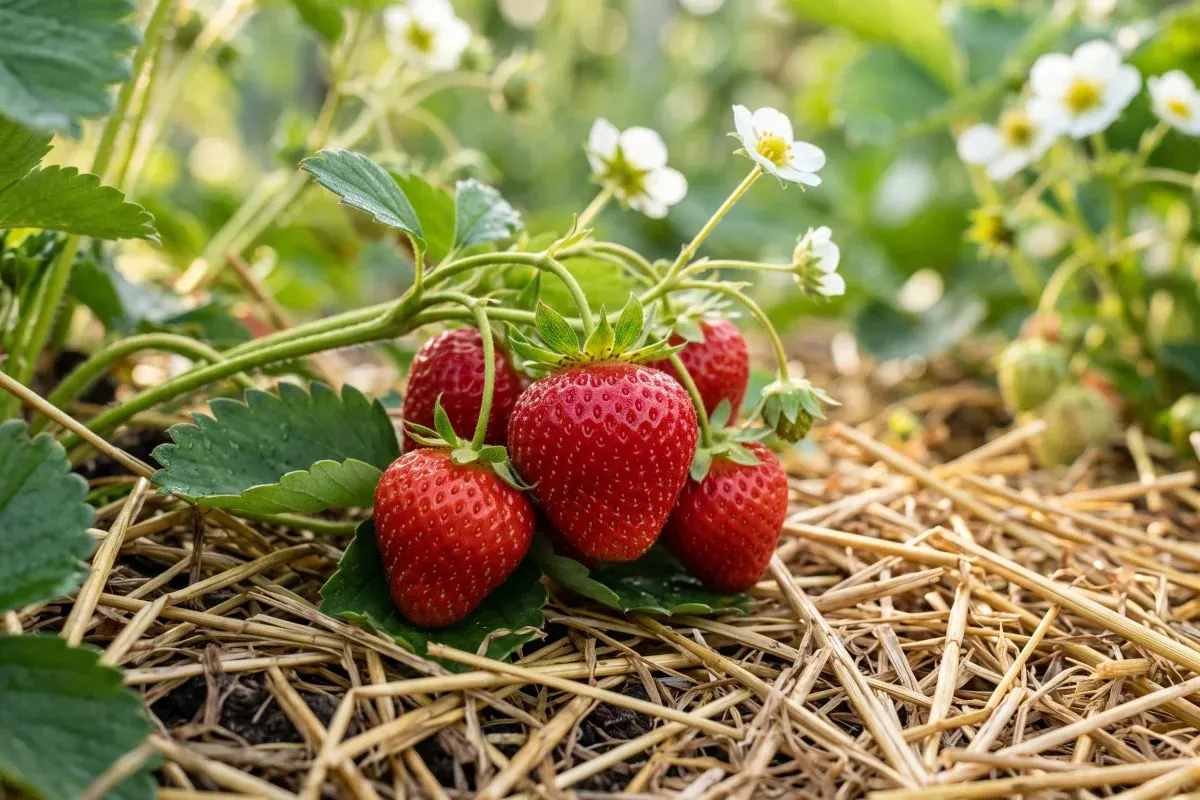
Homegrown strawberries (Fragaria × ananassa) picked sun-warmed and fully ripe from the garden are incomparable to grocery store berries, which are bred for shelf life and transport rather than sweetness and aroma. Strawberries are hardy, perennial, and remarkably productive, yielding delicious fruit for three to five years from a single planting.
However, strawberry plants are uniquely sensitive to planting depth, soil aeration, weed pressure, and fungal moisture. Without proper care, runner management, and post-harvest bed renovation, strawberry patches quickly degenerate into tangled, low-yielding weed beds.
Check out our companion plant reference for Strawberries, or calculate your bed volume with our Raised Bed Soil Calculator.
Understanding the Three Strawberry Types
Before designing your bed or setting a care schedule, you must know which type of strawberry you are growing. Their fruiting habits dictate pruning, spacing, and renovation methods:
| Strawberry Class | Fruiting Pattern | Runner Production | Best Use Case |
|---|---|---|---|
| June-Bearing | One massive, concentrated harvest over 2–3 weeks in late spring / early summer | Heavy runner producer | Preserving, jam making, and matted-row raised beds |
| Everbearing | Two distinct flushes: a moderate crop in June and a second crop in late summer | Moderate runner producer | Compact garden beds and container planters |
| Day-Neutral | Continuous fruit production from early summer until the first autumn freeze | Low runner producer | Modern raised beds, hill systems, and fresh daily snacking |
  June-Bearing:    [====== BIG CROP ======] ..................................................
  Everbearing:     [=== Early Crop ===] ........................ [=== Late Summer Crop ===] ...
  Day-Neutral:     [=== Berry ===][=== Berry ===][=== Berry ===][=== Berry ===][=== Berry ===]
                   (May)          (June)         (July)         (August)       (September)
The Golden Rule of Strawberry Planting Depth
More strawberry plants die from improper planting depth than from drought or frost combined. A strawberry plant does not have a conventional woody stem; it has a crown—the swollen, compressed basal stem from which leaves grow upward and fibrous roots spread downward.
     WRONG: TOO DEEP                CORRECT DEPTH                 WRONG: TOO SHALLOW
   (Crown buried in dirt)      (Soil line at crown midpoint)     (Roots exposed to air)

        \  |  /                         \  |  /                         \  |  /
         \ | /                           \ | /                           \ | /
    ======[CROWN]======             ~~~~~~[CROWN]~~~~~~             ------[CROWN]------
        /  |  \                     ===================                 /  |  \  <-- Exposed
       /   |   \                         /  |  \                       /   |   \     Roots
      /    |    \                       /   |   \                     /    |    \
   *Result: Crown Rots*           *Result: Thriving Growth*       *Result: Dries & Dies*
- Too Deep: If soil or mulch covers the top of the crown, water pools in the leaf axils, rotting emerging flower buds and suffocating the plant.
- Too Shallow: If the crown sits above the soil line, the top tier of fragile roots is exposed to air and sunlight, causing rapid desiccation and death.
- Just Right: Fan the roots out downwards in a cone shape. Backfill soil so the soil line hits the exact midpoint of the crown, anchoring all roots firmly beneath the surface while leaving all green leaf stems fully exposed.
Soil Preparation & The Raised Bed Advantage
Strawberries possess shallow, fibrous root systems that inhabit the top 6 to 10 inches of soil. They are highly vulnerable to waterlogging, root rot (Phytophthora fragariae), and fungal wilt (Verticillium).
1. Soil Texture & Acidity
Strawberries thrive in rich, loose, sandy loam with a slightly acidic pH of 5.5 to 6.5:
- If your soil is heavy clay, planting in raised beds or mounded rows 6 to 8 inches high is mandatory to ensure rapid drainage.
- Calculate your mulch and bed soil needs using our Mulch Calculator and Soil Volume Calculator.
2. Rotational Caution
Never plant strawberries in soil where tomatoes, potatoes, eggplants, or peppers have grown within the past 3 to 4 years. Solanaceous crops carry Verticillium wilt in the soil, which readily infects strawberry root systems.
Irrigation & The Clean Straw Mulch System
Drip Irrigation: Keep Foliage Dry
Strawberries require 1 to 1.5 inches of water per week during leaf formation and up to 2 inches weekly while fruit is swelling.
- Overhead sprinkler watering is the leading cause of Botrytis grey mold (Botrytis cinerea) and leaf spot.
- Install drip irrigation lines directly under your mulch layer. Drip tape or 1/4-inch soaker tubing delivers moisture directly to root zones without wetting the delicate blossoms or berries.
Why Straw Mulch is Essential
The term "strawberry" stems from the historical practice of bedding plants in clean straw:
- Fruit Cleanliness: Unmulched soil splatters onto berries during rainstorms, introducing fungal spores and gritty dirt.
- Disease Prevention: A 2-to-3-inch layer of clean wheat straw cushions ripening berries, keeping them lifted off damp ground where slugs and rot flourish.
- Root Cooling: Straw insulates the shallow root zone against blazing summer soil temperatures exceeding 85°F, which can stall plant metabolism.
Managing Runners: Hill System vs. Matted Row
Strawberry plants propagate naturally by sending out horizontal stolons, commonly called runners. At each runner node, a miniature daughter plant develops roots and settles into the ground.
[Mother Plant] ------------ (Runner Stolon) ------------> [Daughter Plant] ===> (Roots)
Depending on your variety, choose one of two distinct training systems:
1. The Hill System (Best for Day-Neutral & Everbearing)
- Space plants 12 inches apart in double or triple rows.
- Snip off all runners as soon as they appear throughout the growing season.
- By pruning runners, the mother plant channels all photosynthetic sugars into swelling massive crowns and pumping out continuous flower clusters from June through October.
2. The Matted Row System (Best for June-Bearers)
- Space mother plants 18 to 24 inches apart in rows spaced 3 to 4 feet apart.
- During early spring, pinch off all flower blossoms to build strong crowns.
- From mid-summer onward, allow each mother plant to send out 4 to 6 strong daughter runners. Guide these runners into empty spaces 6 inches apart and gently press their rooting nodes into the soil.
- Prune away any excess secondary or tertiary runners to prevent the row from becoming an overcrowded, unventilated thicket.
Fertilization Timing: Avoid the Soft Berry Mistake
Strawberries have specific nutritional rhythms. Applying high-nitrogen fertilizer in early spring prior to harvest results in lush green foliage, hidden flowers, and soft, mushy berries that rot before ripening:
| Variety Type | Spring Feeding | Mid-Season Feeding | Post-Harvest / Autumn Feeding |
|---|---|---|---|
| June-Bearers | Avoid high nitrogen; light compost tea only | None (berries maturing) | Apply balanced organic 10-10-10 or compost immediately after harvest renovation |
| Day-Neutrals | Apply balanced organic fertilizer at bud break | Light liquid fish emulsion/kelp monthly through summer | Stop feeding 4 weeks before first expected frost |
Post-Harvest Bed Renovation (June-Bearers)
June-bearing strawberry patches must be renovated every year immediately after the final harvest (typically late June or early July). Renovation resets the patch, purges diseased foliage, and triggers new crown production for the following year:
  [Step 1: Mow Foliage]  ===>  [Step 2: Narrow Rows]  ===>  [Step 3: Feed & Weed]  ===>  [Step 4: Water Deeply]
  Cut leaves 2" above crowns    Trench down to 10-12" wide    Apply compost / 10-10-10    Stimulate summer regrowth
- Mow or Shear Old Leaves: Set your lawnmower on its highest setting (or use hand shears) and cut all strawberry leaves down to 2 inches above the soil line. Take extreme care not to cut into or damage the crown tissue.
- Narrow the Rows: Rototill or hoe the edges of each matted row, reducing the width from 24 inches down to a narrow strip of 10 to 12 inches. Remove the oldest, woody mother plants, leaving vigorous young runner daughters.
- Thin the Stand: Hand-weed thoroughly and thin the remaining plants so that individual crowns stand roughly 6 inches apart.
- Fertilize & Topdress: Broadcast a complete organic fertilizer or 1/2 inch of sifted compost across the row.
- Water Thoroughly: Provide 1 to 2 inches of water immediately to awaken dormant crown buds. Within two weeks, a pristine carpet of disease-free, vibrant green leaves will emerge.
Winterizing: Overwinter Protection Against Frost Heaving
In USDA hardiness zones 3 through 7, strawberry crowns require winter insulation:
- Without snow cover, repeated winter freeze-thaw cycles cause the soil to heave upward, snapping brittle roots and thrusting crowns out of the ground.
- When to Apply: Wait until late autumn after the plants have experienced two or three hard freezes (temperatures dropping to 20°F) and foliage turns dull reddish-purple.
- How to Apply: Spread a 3-to-4-inch blanket of clean wheat straw directly over the entire strawberry bed.
- Spring Removal: In early spring as the soil warms and green growth begins under the mulch, rake the straw off the plant crowns into the row walkways. The straw is now perfectly positioned to serve as clean fruit mulch for the coming season!
Summary Checklist for Maximum Strawberry Harvests
- Select the Right Variety: Choose June-bearers for large batch harvesting, or day-neutrals for continuous daily fresh picking.
- Match the Crown Depth: Set the crown midpoint exactly flush with the soil surface—never buried, never perched.
- Elevate with Straw: Use clean wheat straw mulch to protect developing berries from wet soil, slugs, and fruit rot.
- Prune Runners Strategically: Remove all runners from day-neutral plants; guide select runners in June-bearing matted rows.
- Renovate Every Summer: Mow, thin, weed, and feed June-bearing beds immediately after harvest for years of heavy yields.
FAQ
What is the single most critical rule when planting strawberry crowns?
Planting depth is paramount. You must position the middle of the strawberry crown exactly flush with the soil surface. Planting too deep buries the crown, causing the emerging flower buds and leaf stems to suffocate and rot. Planting too shallow exposes the upper roots to the air, causing rapid desiccation and plant death.
Should I cut off strawberry runners or let them grow?
For June-bearing varieties in their first year, prune off all runners until mid-summer to direct the plant's energy into root and crown establishment; then allow 3 to 4 daughter runners per plant to root in a matted row system. For day-neutral and everbearing varieties, prune away all runners continuously, as runner formation diverts energy away from berry production.
What kind of mulch is best for strawberries?
Clean, seedless wheat or oat straw is the gold standard mulch for strawberries. Straw keeps developing berries elevated off damp soil, dramatically reducing Botrytis grey mold fruit rot, while conserving soil moisture and keeping the root zone cool during summer heat.
How do you renovate a June-bearing strawberry patch after harvest?
Immediately following the final harvest in early summer: 1) Mow or shear the foliage down to 2 inches above the crowns, taking care not to nick the crown tissue; 2) Narrow the rows down to 10 to 12 inches wide by rototilling or digging out older plants; 3) Broadcast a balanced organic fertilizer (10-10-10 or organic compost); and 4) Water deeply to stimulate vigorous summer runner and crown renewal.
Why are my strawberries small and misshapen?
Small, deformed, or 'cat-faced' strawberries are typically caused by incomplete pollination during bloom (often from cold, rainy weather when bees are inactive) or feeding damage from tarnished plant bugs. Providing diverse flowering companion plants nearby improves pollinator activity.