How to Keep Deer Out of a Garden Without an 8-Foot Fence

By Efraín Vega · Published October 27, 2026
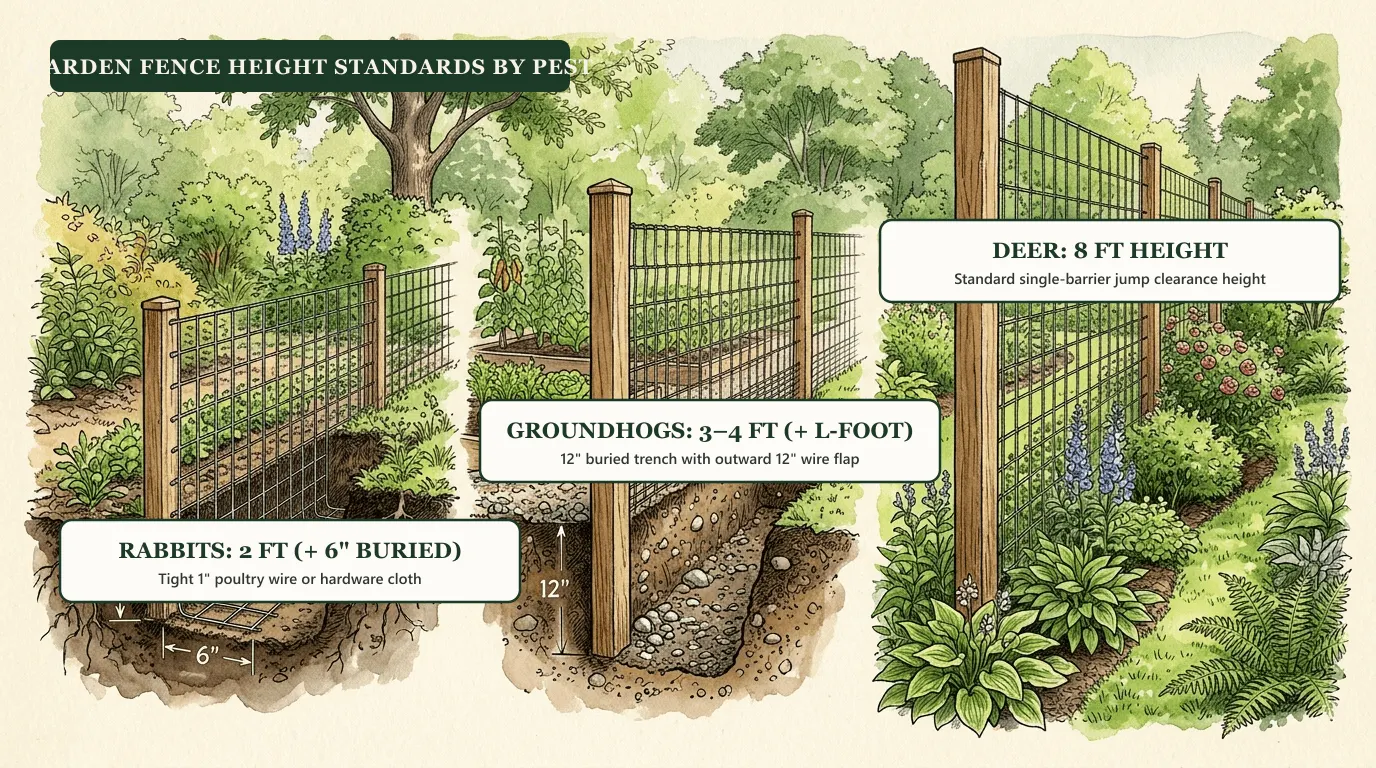
An 8-foot fence is the most reliable way to keep deer out — University of Maryland Extension notes 8 ft fences effectively exclude deer. When that isn't practical, the best alternatives are a two-tiered electric fence, cages around key plants, and rotated repellents, ideally combined.
No single trick works forever. Deer get used to most deterrents, so the plan that holds up is layered.
What works best without a tall fence?
| Method | How well it works | Main limit |
|---|---|---|
| Two-tiered electric polytape fence | Very effective; uses deer's poor depth perception | Needs power and weeds kept clear |
| Wire cages over plants | Reliable for individual plants or small beds | Only protects what's inside |
| Repellents | Reduce browsing | Reapply every 2–3 weeks; deer adapt |
| Scare devices (sprinklers, noise, lights) | Short-term | Deer adapt in about 1–2 weeks |
Summarized from University of Maryland Extension and Clemson Extension.
How does a two-tiered deer fence work?
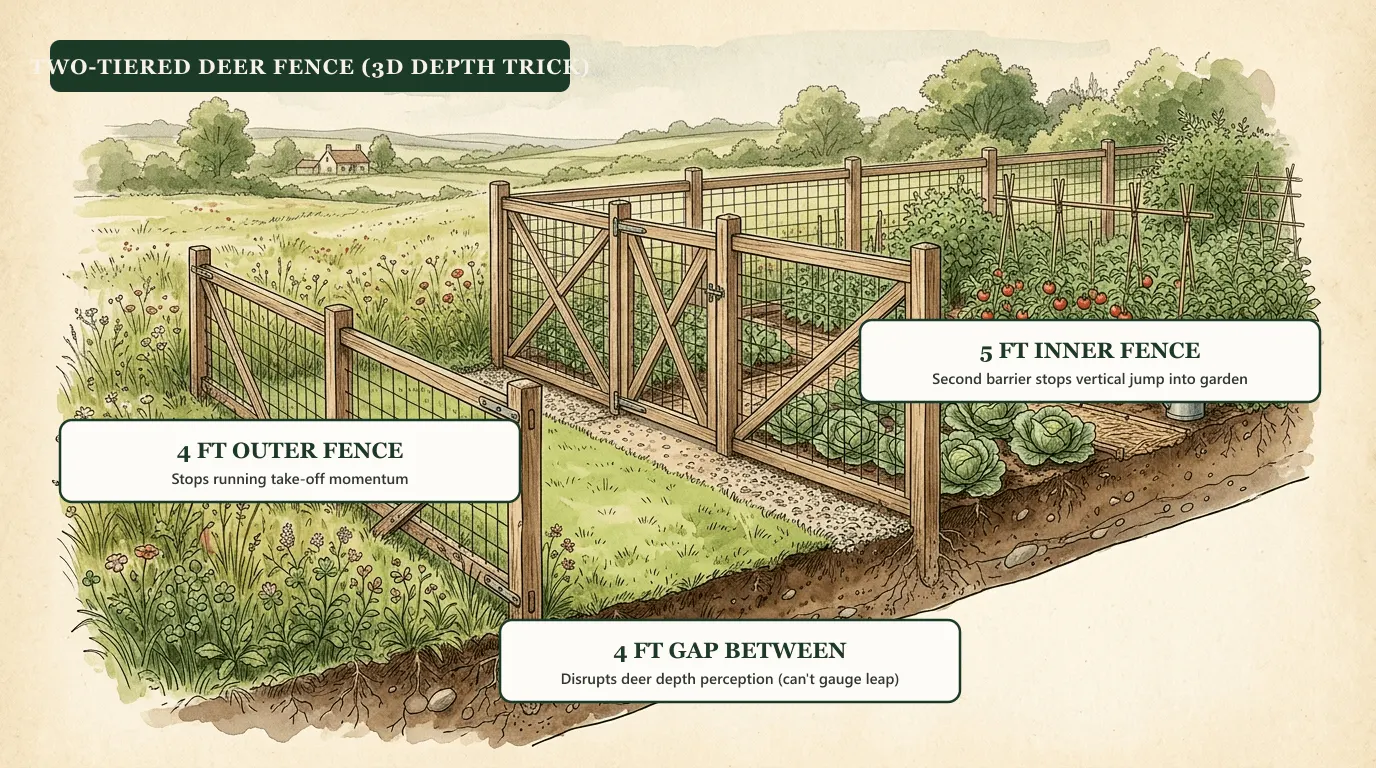
Deer can easily clear a single low fence, but they don't like jumping what they can't judge. Clemson Extension's design uses two low electric fences a short distance apart:
- Outer fence: one strand of electric polytape 18–24 inches off the ground.
- Inner fence: 4–5 feet inside the outer one, with two strands — one 5–10 feet high and one 2–4 feet high.
- Posts: fiberglass poles about 15 feet apart, powered by a solar energizer.
Clemson notes deer won't jump it because they can't judge the distance to get over both. Keep weeds cut back along the fence: vegetation touching the tape shorts it out.
Electric fence safety
Use an energizer made for fencing, follow its grounding instructions, and add warning signs where people walk. Check your city's rules — some limit electric fences in residential areas.
Do cages and netting work?
Yes, for small areas. Maryland Extension notes a 4-foot wire cage protects individual plants, and that enclosures narrower than about 10 feet across are hard for deer to jump into. Hoops with deer netting over a raised bed work the same way for greens and strawberries.
Do deer repellents work?
They reduce damage, but they don't stop hungry deer. Maryland Extension lists soap-based and bloodmeal-based repellents as needing reapplication every 2–3 weeks, and notes deer get used to them over time — so rotate products. Read labels carefully: not every repellent is approved for use on food crops.
What about dogs and scare devices?
Motion-activated sprinklers, strobes and noise makers work for a short time — Maryland Extension notes about 1–2 weeks before deer adapt; moving them every few days extends that. A dog that spends time outside is one of the more effective deterrents, according to the same guide.
If you decide a real fence is worth it after all, see how tall a garden fence should be, and use the Garden Fence Calculator for posts and mesh.
Sources: The 4 Pillars of Managing Deer Damage — UMD Extension, Deer Management Using a Two-Tiered Fence System — Clemson HGIC.
FAQ
What is the cheapest way to keep deer out of a garden?
For a small garden, wire cages around the plants you care most about and a rotated repellent. For a larger area, a two-tiered electric polytape fence costs far less than 8 ft wire fencing and works on deer's poor depth perception.
How often do deer repellents need to be reapplied?
University of Maryland Extension lists soap- and bloodmeal-based repellents as needing reapplication about every 2–3 weeks, plus after heavy rain. Rotate products, because deer get used to them.
Do motion sprinklers and noise makers keep deer away?
Briefly. Maryland Extension notes scare devices tend to work for about 1–2 weeks before deer get used to them; moving them every few days helps.
Can I use repellents on vegetables?
Check the label. Some repellents are approved for food crops and others are only for ornamentals or perimeter use. Maryland Extension notes putrescent egg products are for perimeter use, not on food crops.